

Marine Safety Fees Regulations support maritime operations that are safe and well-regulated. These rules set fees for safety oversight, vessel monitoring and other administrative services designed to protect waterway users and waterway itself. It is essential for vessel owners and operators to understand these fees for compliance and financial planning.
A vessel owner is usually first exposed to safety fees during registration, inspection and government–related vessel activity.
Without explanation, these charges may appear complicated or unwelcome. In reality, they follow an established framework that allows them to be fair, transparent and consistently funded for the marine safety program.
This article explains Marine Safety Fees Regulations in simple and formal language. It explains the rationale for the regulations, how they are enforced, and the expectations for vessel owners. If owners understand how safety fees work and how they are structured, they can confidently manage their obligations and avoid unnecessary delays or misunderstandings.
Summary of the regulations related to marine safety fees
Charges for marine safety services are defined in the Marine Safety Fees Regulations. The administrative functions, monitoring, documentation, and inspection services are supportive of safe navigation. The service delivery costs reflect the structure of fees.
Target cost of programs shows the amount required for quality vision. Fees help not all marine services should be funded solely through general public funding. Where possible, costs will be shared with those who use marine services. This method brings sustainability and accountability.
These rules are important for vessel owners because they provide certitude. Designation of clear fees allows for the owners to foresee the costs in terms of registration, certification or government infrastructure vessel operations. Being open reduces confusion and problems.
To preserve uniformity, authorities utilize the fee framework. It is free to ensure that similar vessels get roughly similar fees for similar services. The application is accurate enough for confidence in the regulatory system.
| Aspect | Regulated Fees | Unregulated Fees |
|---|---|---|
| Cost Transparency | High – Breakdown of charges is mandatory and standardized. | Low – Hidden costs and “fine print” are common; pricing may be arbitrary. |
| Consistency | Strong – Fees are fixed by law or agency guidelines across a sector. | Variable – Prices fluctuate based on market demand, location, or provider. |
| Budget Predictability | Reliable – Changes are infrequent and require public notice or review. | Uncertain – Providers can hike rates suddenly to cover costs or increase profit. |
| Administrative Clarity | Clear – Follows a strict framework with accessible refund and dispute rules. | Confusing – Processes for challenging a fee are often opaque or non-existent. |
How Are Marine Safety Fees Applied?
Regulations governing fees for certain marine services and particular vessel characteristics. Authorities concentrate on equality, significance, and proportionality.
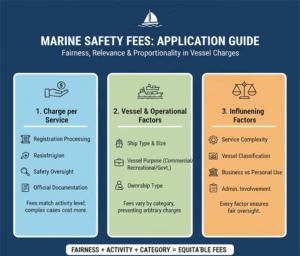
Charge per Service
Fees are commonly linked to services like registration processing, safety oversight, and official documentation. Users pay for services they use, not a flat fee.
It allows costs to match the level of activity. Vessels that need more supervision or administrative tasks may need to pay more. More straightforward cases typically have reduced charges.
Ship type and operational circumstances
The Fees Might Depend Upon the Size, Purpose and Ownership Type of the Small Vessel Renewal. The fee categories may vary for government vessels, commercial operators and recreational owners.
The regulations specify these distinctions to avoid arbitrary charges. Owner payment categories show owners the reason for the fee and explain how the authority calculates it.
Factors that influence fees include
- Various kinds of marine safety service offered.
- The classification of the vessel.
- Owning or running a business.
- Involvement of complex administration.
Every factor helps oversee the fee.
Comparing taxpayer compliance with and without fee awareness
Marine Safety Fees Regulations Understanding affects compliance outcomes. Owners that know their fee obligations plan accordingly. Those who don’t might experience delays or unforeseen expenses.
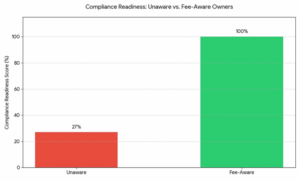
- Eliminating Financial Friction: Owners who are fee-aware achieve a readiness score of 100%.
- Preventing Lapsed Status: Obliviousness (27%) is often the cause of lapsed status when it comes to non-compliance. When owners do not know there are fees to be paid, these will forget to renew and lose legal operating status.
- Budgetary Authority: The knowledge of fees can turn regulatory costs from an unpleasant shock into a line item in a budget, allowing for financial planning and the smooth operation of vessels.
- Operational Resilience: High compliance readiness ensures that a vessel is always in an inspection-ready condition. This helps avoid costly detentions or fines while at sea.
The graph indicates higher preparedness of owners who understand fee rules. Although it is simplified, it portrays common experience from the office.
Real life example
The owner who budgets for the safety fees due on the vessel registration comes free of charge. Another owner ignores charges as processes delay while intending payment.
This comparison shows that awareness aids efficiency.
More Guidance on Safety Fee Management
The introduction explains the obligations established by the Marine Safety Fees Regulations. At the beginning of any registration or compliance process, owners must consider relevant fees. Opportunity prevents last-minute issues.
Keep organized records of your payments and confirmations. Documentation resolves queries in no time and helps in audits or reviews.
Incorporate fees into operating budgets Make safety fees a regular part of your vessel ownership experience rather than an unexpected one. This attitude alleviates monetary concerns.
Reply to notices about fees. Slow processing can occur due to payment delays or clarification issues. Taking action in time will keep compliance compatible.
Helpful best practices include
- Review appropriate fees prior to submitting applications
- Set aside money each year for fees related to safety
- Make sure you save your proof of payment.
- Take action to fee notices without delay
The steps help in smooth compliance.
The Importance of Marine Safety Fees Regulations
The Marine Safety Fees Regulations ensure the funding and administration of maritime safety services. They encourage transparency, fairness, and consistency among vessel categories. These rules bring assurance and framework for the owners.
Knowing how fees apply helps avoid confusion and delays. National Vessel Registry Center, Corp It becomes noticeably convenient to interact with different authorities. Continuity of operations is protective.
When vessel owners consider safety fees as part of responsible vessel ownership, they strengthen compliance and contribute to safer waterways. A clear understanding of
marine safety charges regulation will ultimately support efficiency and effectiveness in our accountability and ultimately the long-term safety of the maritime industry.
FAQ
Frequently Asked Questions About Marine Safety Fees Regulations: A Complete Guide for Vessel Owners
How does this article help with marine safety fees regulations guide?
This article adds context around marine safety fees regulations guide, while the linked service and archive pages below help you move from research to action so you can move to the correct next step.
What information should I gather before taking the next step?
It helps to have the relevant vessel details, ownership information, and any current registry or licence numbers ready before you compare forms, filing paths, or related updates.
Where should I continue reading on this topic?
Use the related pages and resources below to review the main service page, the matching archive, and closely related internal topics.
