

The Bare-Boat Charter Registry is a unique type of registration entity to provide registration for a ship which is chartered out without crew, stores or management left on board by the owners. The charterer in this case takes over the full possession and concomitant liabilities of the ship during the period of the charter. Since this alters the operational control of the ship for the period of the charter, this needs to be appropriately reflected in the register entries.
Meanwhile, bare-boat chartering is common in commercial shipping, offshore, and the international deployment of vessels. Without timely updates on the registry of the use of the vessels under bare-boat charter, failures to comply with regulations, delays in inspections, or even confusion as to jurisdiction may arise. Fleet operators and authorities depend on the registry to figure out compliance, accountability, nationality, and regulatory jurisdiction matters.
Additionally, the writers offer a simple and straightforward guide regarding Bare-Boat Charter Registry. The content discusses the definition, operation, potential clients, and differences of the registry compared to normal ship registration. With the knowledge from the guide, vessel owner and charterers can confidently proceed with the bare-boat arrangements under the proposed framework while still being fully compliant with the regulatory requirements.
Understanding the Bare-Boat Charter Registry
The charter registry with the simplest name, Bare-Boat Charter Registry, serves to register ships that are time-bare-boat-chartered. The bare-boat charter involves a complete transfer of operational command to the charterer, unlike time charters or voyage charters. The complete transfer is also reflected in the registry, but only during the period of the charter.
It does not alter ownership on a permanent basis. The legal title all the time remains with the owner and the operational control is given to a charterer. The registry is essentially a way of informing the authorities as to who has operational control, and is responsible for compliance with all merits, safety, stability and operation during the charter period.
The significance of clarity of Bare-Boat Charter Registry is that it prevents jurisdictions, enforcement and liability disputes. Clarity in registry records enable authorities to readily verify the liable party.
For charterers, the registry recognition adds to the legitimacy, as it can validate their right to be operating the vessel in a legally acceptable manner. For the owners, it up shields their right by delineating the boundaries of their responsibilities.
| Aspect | Standard Registration | Bare-Boat Charter Registry |
|---|---|---|
| Operational control | Owner | Charterer |
| Ownership | Owner | Owner |
| Registry status | Permanent | Temporary |
| Compliance responsibility | Owner | Charterer |
How Bare-Boat Charter Registration Works
Bare-boat charter registration is simply an adjustment in records, where the authorities are focused on the transfer of operational control (temporarily) and transparency and accountability.
Eligibility and qualifying arrangements
Bare-boat registry is not applicable to all charter contracts. If full enjoyment and control is not passed to the charterer, then bare-boat registry is not applicable. Crewed-charters and other similar arrangements will not usually qualify.
Also, chart duration is important. Registry authorities may ask whether the charter has a clear start and end, as having a defined timeframe emphasizes the temporary aspect of the agreement.
Registration process and limitations
Registry updates are done against Charter Agreement. The authorities verify the Charter Agreement for its bare-boat nature, if accepted, the vessel is entered in the Bare-Boat Charter Registry for the agreed term.
The registration period is limited. Upon the termination of the charter, it is necessary to re-update the registry. Non-updating of registry can lead to compliance gaps.
Elements common to bare-boat registry amendment may include:
- Executed bare-boat charter agreement
- Identification of owner and charterer
- Defined charter period
- Vessel identification and registry details
Each element ensures accountability and accuracy.
Comparing Operations With and Without Bare-Boat Registration
The Bare-Boat Charter Registry reveals its worth when juxtaposed with results of operations. Vessels registered correctly under bare-boat charters function with authority that everyone can easily understand. Compliance obligations are obvious.
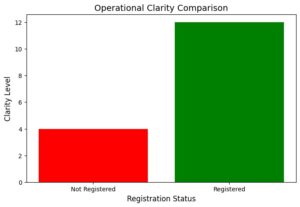
Bare-boat vessels without flagging updates often face challenges. The jurisdiction, liabilities, or compliance issues raise concerns, and inspections or operations may delay.
- The graph shows the operational clarity in the registered versus the not registered state.
- Registration status of ‘Not Registered’ was depicted with a shorter, less clear red bar.
- Registered (Bare-Boat Registered) has a higher clarity level as shown by the taller green bar.
- This shows that conducting bare-boat registration creates greater operational transparency.
- This hypothetical visualization reflects typical operational experience of more complex phenomena that are better understood and controlled by the registration.
Practical example
A bare-boat chartered vessel supports offshore operations. If there are registry updates, the charterer quickly arranges the inspections. In case of no registry updates, authorities seek further verifications resulting in demurrage issues.
This comparison shows why proper registry treatment matters.
Practical Guidance for Owners and Charterers
Interaction between a bare-boat charter owner and charterers is a vital process. Contract planners should settle regulatory and registry requirements during the initial stages of planning. Violations of deadlines may cause misunderstanding.
Charter agreements should accurately reflect condition of responsibility and the Owner should make efforts to avoid ambiguity; otherwise, disputes over compliance may arise. Registry records need clear terms of contract.
Charterers should carefully check the charter duration. The registry position should reflect the real operational control. Problems can also come from the expired registry.
Keep charter period records in an organized manner. Registry confirmations and agreements should be accessible during surveys.
Helpful best practices include:
- Confirm the charter qualifies as bare-boat
- Define charter start and end dates clearly
- Update registry records promptly
- Retain confirmation documents securely
These steps support compliant operations.
Why the Bare-Boat Charter Registry Matters
Bare-Boat Charter Registry at National Vessel Registry Center, Corp. is essential and shall reflect the temporary exercise of operational control and compliance on the bare-boat charter. Failure of a charter party to register on the Bare-Boat Charter Registry shall subject the vessel to untold regulatory and operational risk.
Owners benefit from clear boundaries of responsibility. Charterers gain recognized authority to operate the vessel lawfully. Authorities benefit from accurate, current registry records that support enforcement and safety oversight.
By understanding and using the Bare-Boat Charter Registry correctly, stakeholders can structure charter arrangements confidently. Proper registry management ensures lawful operations, reduced risk, and long-term operational success in complex maritime environments.
FAQ
Frequently Asked Questions About Bare-Boat Charter Registry: Guide for Vessel Owners and Charterers
How does this article help with bare boat charter registry guide?
This article adds context around bare boat charter registry guide, while the linked service and archive pages below help you move from research to action so you can move to the correct next step.
What information should I gather before taking the next step?
It helps to have the relevant vessel details, ownership information, and any current registry or licence numbers ready before you compare forms, filing paths, or related updates.
Where should I continue reading on this topic?
Use the related pages and resources below to review the main service page, the matching archive, and closely related internal topics.
