
An Application for Change of Address is an important update for vessel owners who move or change their official address. Address is an important information as it connects ownership records with real-world accountability, inspections, and communication. When an address is updated but records do not reflect it, owners could miss official correspondence, experience delays in approvals, or raise compliance concerns with review officials.
Most proprietors might think that address evolution is a trivial evolution. Nevertheless, the registries depend on precise addresses to verify the legitimacy of ownership and facilitate reliable recording. As the case may be, address changes due to movement, restructuring, or administrative error should be reported promptly to safeguard the interests of proprietors and authorities.
The Application for Change of Address is reviewed and discussed in simple and pragmatic terms in this guide. The importance of the update, the information needed, and the review procedure are all covered. To avoid potential disruptions and ensure the record is in alignment, best practices are provided. With careful and systematic approach, vessel owners may efficiently carry out the update and ensure their compliance remains uninterrupted.
Understanding the Application for Change of Address
An Application for Change of Address is used to inform the official registry of a new mailing or place of residence address for the vessel owner. It does not affect ownership or status of the vessel. It maintains the accuracy of correspondence and records.
Address details are also critical for notices, renewals and verifications. An inaccurate address may result in missed deadlines or returned mail. Reliable updates will help in efficient administration of the registry and also reduce disputes.
Traceability is the key aspect of this application. The authorities should be able to contact the owners in a fail-safe manner. Accurate addresses can also support audit and record verification processes.
It is always advisable for the owners to update the record immediately after the move. Any undue delay would increase the chances of disparity between the record and the actual situation. Updating the record at the earliest would eliminate avoidable follow-ups.
| Record Aspect | Before Update | After Update |
|---|---|---|
| Contact accuracy | Reduced | Restored |
| Notice delivery | Uncertain | Reliable |
| Compliance confidence | Lower | Strong |
| Administrative delays | Possible | Reduced |
Requirements, Review, and Common Scenarios
The Application for Change of Address undergoes a simple verification process to ensure authenticity. The authorities validate that the application corresponds to the available records.
Who should file and when
When the official address of the owner changes, it needs to be filed. Owner address can change due to residential or business moves or it can be updated to correct previous filings. Filing it timely will reduce compliance risk.
Consistency in the owner. Where there are joint or multiple owners, the address for service must be in the name of the correct person or entity. It is best to avoid ambiguity.
Information needed for approval
Top tier USBL Applications must contain identifying information verification with registry records. Name, identifiers, vessel ID and prior address information. Must be accurate.
During this event, the authorities do not perform a re-evaluation of the ownership of the record. They only check the corresponding data of the change request and accordingly update their records.
Key submission elements often include:
- Vessel identification details
- Owner identification information
- Previous and new address entries
- Completed and signed application
Completeness and consistency drive approval speed.
Comparing Outcomes: Updated Versus Outdated Addresses
The significance of address precision becomes evident during normal business activities. Current data facilitates efficient workflows and communications.
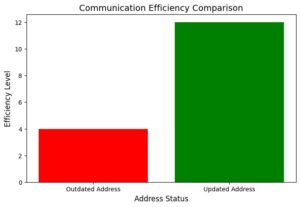
Missed notices are often given due to stale addresses. The owner gets to know the issue only after the last date. This is an avoidable situation
- The graph compares communication efficiency between outdated and updated addresses.
- Outdated Address shows lower efficiency, represented by the shorter red bar.
- Updated Address shows higher efficiency, represented by the taller green bar.
- The graph illustrates that using current contact information significantly improves communication efficiency.
This simplified representation highlights common administrative outcomes where accurate and updated details lead to more effective communication.
Practical example
An owner relocates but delays updating records. Renewal notices go to the old address, causing a late response. After submitting an Application for Change of Address, future notices arrive correctly.
This example shows how small updates prevent larger issues.
Practical Steps for a Smooth Address Update
Preparation ensures a smooth Application for Change of Address. Owners should first confirm current registry details. Verifying existing records prevents mismatches.
Enter the new address exactly as it should appear. Consistent formatting improves acceptance. Avoid abbreviations that differ from official records.
Submit the application promptly after relocation. Waiting increases the risk of missed correspondence. Early action demonstrates responsibility.
Retain confirmation of submission. These records provide assurance while updates process. Organized documentation supports future reference.
Helpful best practices include:
- Verify current registry information first
- Use consistent address formatting
- Submit promptly after any change
- Save confirmation receipts securely
These steps minimize delays and maintain compliance.
Keeping Records Current and Compliant
An Application for Change of Address of National Vessel Registry Center, Corp. is a simple but essential update that protects communication, compliance, and record accuracy. Address details connect owners to official notices and registry actions. Keeping them current prevents avoidable disruptions.
Owners who update promptly benefit from smoother administration and stronger compliance confidence. Accurate records reduce follow-ups and ensure timely delivery of important correspondence.
By understanding requirements and following best practices, vessel owners can complete address updates efficiently. This proactive approach supports uninterrupted operations and long-term peace of mind.
FAQ
Frequently Asked Questions About Application for Change of Address: Guide for Vessel Owners
How does this article help with application for change of address guide?
This article adds context around application for change of address guide, while the linked service and archive pages below help you move from research to action so you can move to the correct next step.
What information should I gather before taking the next step?
It helps to have the relevant vessel details, ownership information, and any current registry or licence numbers ready before you compare forms, filing paths, or related updates.
Where should I continue reading on this topic?
Use the related pages and resources below to review the main service page, the matching archive, and closely related internal topics.
