

A Canadian Vessel Search by Name is a good method of research that one can use to identify, verify and understand the history of vessels registered in Canada. Names of vessels are perhaps the most visible identifiers, making a name search the most natural place for buyers, owners, lenders and researchers to start. A vessel’s history search yields useful information whether you are performing due diligence before a purchase or investigating a vessel.
Several people believe a name of the vessel provides little legal information. In practice, names connect to registry records that reveal ownership changes and current registration status, including past entries and changes. A name-based search can, when properly used, mitigate risks and save you money.
This article clearly and professionally explains the Canadian Vessel Search by Name process. It entails an overview of how name searches work, what information it divulges, and how it stacks up to other methods. Understanding this process enables readers to use vessel name searches effectively and confidently for legal or historical purposes.
Search for Canadian Vessels by Name
Using a vessel’s name, a Canadian Vessel Search queries government databases to locate registry information. Because many vessels are well-known by name rather than number, this a practical entry point into registry research.
By matching the vessel name against the records of registry the search works. These records may consist of the registration details, the ownership history, and the changes in the past. Data from the registry identifies the vessels specifically despite their similarities in name.
Searching by name is important because it is accessible The names will be visible on the hulls, documents and listings. Using the name makes it easier to conduct a preliminary investigation where there are no other identifiers.
For the owners, name searches provide confirmation that the registry records indicate the current reality concerning the name. For the buyer or lender, they are a warning system that detects problems early on in the process.
| Aspect | Name-Based Search | Number-Based Search |
|---|---|---|
| Ease of Starting | High – Intuitive and requires only basic identity information. | Moderate – Requires specific identifiers (VIN, Serial #, HIN). |
| Public Familiarity | Strong – The standard method for most casual or initial inquiries. | Limited – Typically used by professionals, lenders, or agencies. |
| Precision | Moderate – Can be hampered by common names or spelling errors. | High – Directly targets a unique, specific asset or record. |
| Research Accessibility | Broad – Available across most public and commercial databases. | More Technical – Often requires access to specialized registries. |
What Information a Title Search Can Reveal
Searching for the name of a Canadian vessel can uncover a lot of information. When users know what to expect, they rate results much better.
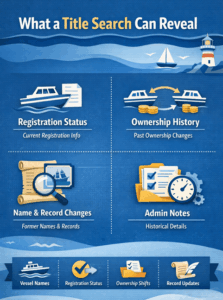
Status of possession and registration
A search shows the current registration status. It indicates whether the vessel is currently registered or not. Depending on the availability of records, ownership details may also show.
Changes in ownership may be visible historically. Researchers are able to ascertain how often a vessel has changed hands. Closer review appears warranted for frequent transfers.
Ahistorical administrative insight
Searching by name may indicate previous name changes or registration. This information helps trace the identity of a craft over time. A historical context is useful when carrying out due diligence or research.
Long-term research can also come with administrative notes. These notes describe changes or alterations that have been recorded in the registry.
Name searches reveal common information such as
- Names of vessels in use or used.
- Status of registration.
- Indicators of Ownership History.
- Changes that were recorded overtime.
Every element added to the vessel profile is a contribution toward greater clarity.
Analyzing Name Searches and Other Methods
Learning about the differences between name searches and other research methods helps users select the right one. Name searches are available but may take additional verification.
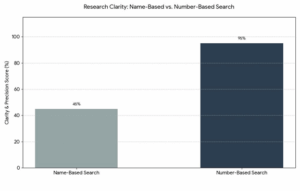
- Precision Benchmark: The Number-Based Search is the definitive metric against which accuracy is measured. It achieves a clarity score of 95%, as it uses a unique identifier for a person so that there is no commonality with names which is present in the first or last name searches.
- Ambiguity Reduction: Individuals or corporations with similar names can often create background intellectual identification errors. Name-Based Search (45%) is thus more prone to ambiguity and needs more verification layers to separate them.
- Operational Speed: Number-based methods are often preferred for due diligence in major financial, legal and similar high-stake affairs as these allow for quick retrieval of meaningful data due to bypassing the specificity of language, confusion of spelling variants and the like.
- Technical Authority: The high clarity of numerical indexing is the reason of preference by global registries over identifiers for vessels, aircraft, and real estate to maintain an indisputable chain of title.
Number-based searches depicted in the graph have high precision. Searching for a name is a good first step but may need to be checked.
Real-world example
A purchaser sees a boat that is listed only by its name. A vessel search by name in Canada reveals registration history and legitimacy confirmation.
The buyer then makes further verification with a registry number.
This layered approach reveals how name searches fit into larger research strategies.
Guide to Effective Vessel Name Searches
Learning the right approach to a Canadian Vessel Search by Name helps. Small difference in spelling and formatting may affect output.
Begin by confirming the precise registered name. The spacing, punctuation, or suffixes of vessel names matter. Improved outcomes accuracy.
Be careful of similar or duplicate names. Referencing extra particulars forestalls confusion.
Begin with name searches, but do not end with them. When more identifiers are available, follow up. This ensures conclusions are reliable.
Helpful Practices to Follow
- Double check the name of the vessel registered.
- Look for names that might be similar or duplicates.
- Compare against details of the other vessels.
- Name searches should be used as part of broader research.
Taking these steps will enhance accuracy and confidence.
Importance of Searching Canadian Ships by Name
A National Vessel Registry Center, Corp. Search by Name is a powerful and usable research tool for owner buyers and other maritime professionals. Utilizing the most well-known vessel identifier, it supplies access to official registry records. When applied correctly, it supports transparency and decision-making.
Finding out the ownership trends of an entity helps in understanding. Although they may not always be conclusive, but they point users to re-confirm. By using this approach, uncertainty lowered and risk minimized.
Users can research with confidence if they understand how a vessel name search works and best practices. The vessel search by name in Canada is still a practical resource for maritime due diligence and historical research.
FAQ
Frequently Asked Questions About Canadian Vessel Search by Name: A Complete Guide for Owners and Researchers
How does this article help with canadian vessel search by name guide?
This article adds context around canadian vessel search by name guide, while the linked service and archive pages below help you move from research to action so you can narrow down the record search and review the right supporting information.
What information should I gather before taking the next step?
It helps to have the vessel name, registry details, official number, or other record identifiers ready before you compare forms, filing paths, or related updates.
Where should I continue reading on this topic?
Use the related pages and resources below to review the main service page, the matching archive, and closely related internal topics.
