
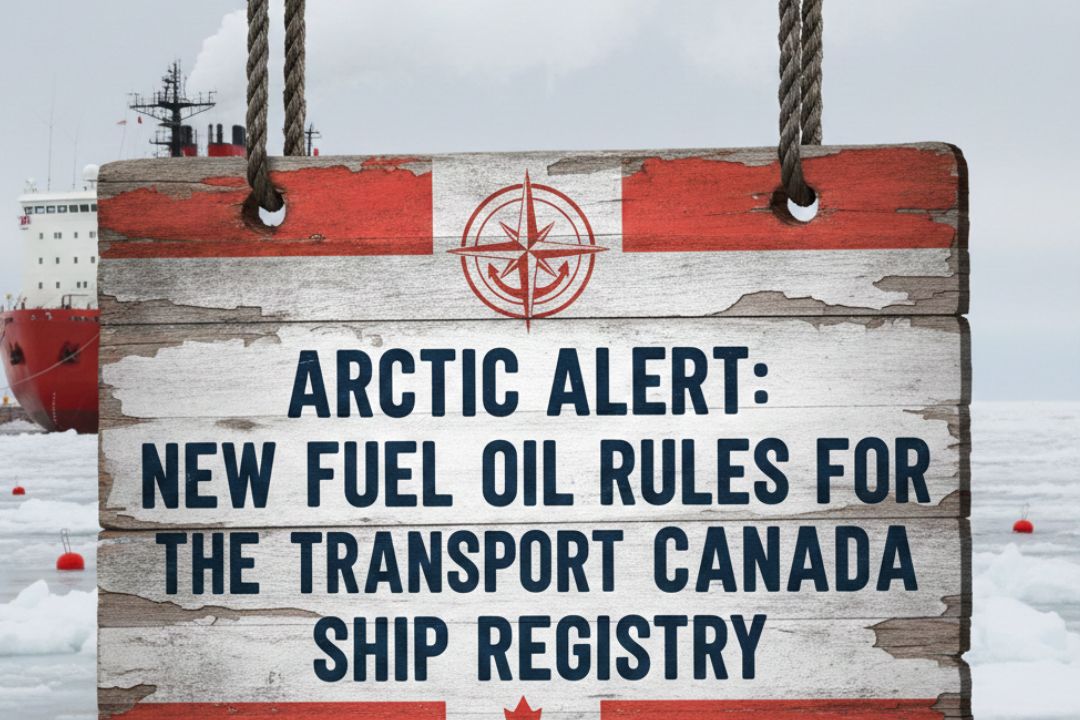
The Arctic is entering a new regulatory era, and boat owners who operate in northern waters need to be prepared. Recent guidance from Transport Canada makes clear that the Transport Canada ship registry is no longer just an administrative step.
Instead, it is a frontline compliance tool tied directly to environmental protection and operational oversight in Canada’s Arctic. With a firm deadline approaching in January 2026, registration status, fuel use, and real-world operations must align more closely than ever before.
At National Vessel Registry Center Corp., our service is built to help boat owners, operators, and managers navigate Canadian boat registration requirements efficiently, using official Transport Canada forms through a centralized online portal. As rules evolve, especially those tied to Arctic operations, accuracy and consistency across registration and reporting become essential.
Arctic Operations and the New Fuel Landscape
Transport Canada has implemented the International Maritime Organization’s prohibition on the use and carriage for use of heavy fuel oil in Arctic waters. This prohibition is formalized through an Interim Order and explained in detail in this Ship Safety Bulletin issued by Transport Canada.
This regulatory shift affects how boats are registered, how they are reported before entering Arctic waters, and how compliance is verified once they are operating in the region.
The Arctic and the Role of the Transport Canada Ship Registry
The Transport Canada ship registry functions as more than a record of ownership. In Arctic contexts, it acts as a control point that supports environmental safeguards. Registration connects a boat to a responsible party, an operational profile, and a compliance framework that allows Transport Canada to enforce international and domestic rules.
From our perspective as a registry service provider, this connection is critical for several reasons:
- Registration data allows authorities to confirm which boats are authorized to operate in Arctic waters
- Fuel-related compliance can be assessed against the type of boat, its construction, and its declared operations
- Enforcement of heavy fuel oil prohibitions depends on accurate registry information
- Environmental response planning relies on knowing which boats are present and active
By using our portal to access the correct Transport Canada forms, boat owners help ensure their registration details align with current regulatory expectations. This supports enforcement efforts designed to protect fragile Arctic ecosystems from spills that would be difficult or impossible to remediate.

January 2026 and Interim Order No. 3
The most time-sensitive element of this regulatory update is Interim Order No. 3, which comes into effect on January 1, 2026. This date represents a hard compliance point for many boats operating in Canadian Arctic waters.
Under the Interim Order:
- Most boats must stop using and carrying heavy fuel oil for use in Arctic waters
- Certain boats may qualify for a limited extension until 2029
- Eligibility for the extension is tied to specific construction features, such as protected fuel tanks
This is where registry accuracy becomes especially important. Boats listed on the Transport Canada ship registry that operate in northern regions must be evaluated against these criteria well before the deadline.
Our service supports this process by giving you streamlined access to the appropriate registration and update forms. While we do not gather documents on your behalf, we make it easier to use what you already have to keep your registration current.
Situations where early review is especially relevant include:
- Boats that seasonally transit Arctic waters
- Boats that are newly acquired and not yet fully updated in the registry
- Boats that have undergone modifications affecting fuel storage
- Operators managing fleets with mixed fuel configurations
The 2029 Extension and Protected Tank Criteria
Not all boats are treated the same under the heavy fuel oil prohibition. Transport Canada recognizes that certain designs offer enhanced protection against spills, which is why a limited extension to July 1, 2029, may apply in specific cases.
Key points related to the extension include:
- Only boats with protected fuel tanks may qualify
- Protection standards are strictly defined by regulation
- The extension is not automatic and must be justified
- Registry and operational reporting must reflect actual fuel use
Accurate listing on the Transport Canada ship registry helps authorities assess whether a boat’s claimed eligibility matches its documented characteristics. This reinforces the idea that registration is directly connected to operational reality, not just paperwork.
Reporting Fuel Types to NORDREG
Beyond registration, boats operating in Arctic waters must comply with reporting requirements through the Northern Canada Vessel Traffic Services, commonly referred to as NORDREG.
Before entering Arctic waters, operators are required to report:
- The type of fuel carried on board
- The type of fuel intended for use
- Voyage details and operational plans
These reports are compared against registry information. Discrepancies can raise compliance concerns, even if registration appears otherwise complete.
This is another area where our service plays a supporting role. By helping you maintain accurate Canadian boat registration records using Transport Canada forms, we reduce the risk of mismatches between registry data and NORDREG reporting.
How Licencing, the Transport Canada Ship Registry, and Arctic Rules Intersect
Canadian maritime compliance involves several parallel systems, each with a distinct purpose. It is essential not to conflate them.
For clarity:
- The Transport Canada ship registry applies to boats that are registered under federal law
- A pleasure craft licence applies to specific non-registered recreational boats
- Small boat registration and pleasure craft licencing are not the same and serve different legal functions
Where Arctic fuel rules apply, the type of registration or licensing determines which obligations attach to the boat. In some cases, operators may need to review whether their current status remains appropriate for their intended operations.
Operational Scenarios to Be Aware Of
The heavy fuel oil prohibition is grounded in both international agreements and domestic legislation. Enforcement relies on a framework of Canadian maritime laws that give Transport Canada authority to regulate Arctic operations.
From our experience assisting users with registry access, certain scenarios frequently prompt questions about Arctic compliance:
- A boat previously operating only in southern waters is reassigned north
- A change in fuel type occurs without a corresponding registry update
- An operator wants to check boat history before purchasing a boat intended for Arctic use
- A fleet owner consolidates registrations under a single management structure
In each case, ensuring the Transport Canada ship registry reflects current and accurate information helps avoid compliance issues during Arctic operations.
Using Our Portal to Stay Aligned
Our role is focused and specific. We provide an online portal that makes it easier to access Transport Canada forms related to registration, licensing, and registry updates. What we do offer includes:
- Centralized access to official Transport Canada registration forms
- A streamlined way to manage Canadian boat registration filings
- Support for registry-related updates when operational details change
- Easier navigation for users dealing with multiple boats or transactions
This approach is particularly valuable when regulatory changes, like the Arctic fuel prohibition, increase the consequences of outdated or inconsistent registry information.

Staying Ahead of the January 2026 deadline
With January 1, 2026 approaching, now is the appropriate time for operators to review their registry status, fuel configurations, and reporting practices.
The Arctic environment leaves little room for error. Accurate registration, truthful reporting, and alignment with Canadian maritime laws are no longer optional administrative details. They are central to lawful Arctic operations, and the registry is where that responsibility begins.