
Alterations of Registered Vessel means changes that require reporting updates on a registered vessel. Registered vessel alterations cover a range of changes made to the ship; these are not just cosmetic changes. Alterations of registered vessels also encompass changes in the ship’s dimensions, tonnage, changes in propulsion, and changes in the identifying information of a ship as shown in a registry. If there is an alteration, a ship’s registry must also reflect the change to maintain its legality.
Vessel owners often pay attention to performance or safety upgrades but are unaware of the administrative aspects. Unreported upgrades may result in discrepancies in vessel records, compliance challenges, or inspections and transaction delays. State authorities depend on the data in the registry to ensure the vessel’s current status corresponds with the official description.
Understanding Alterations of Registered Vessel
Alterations of Registered Vessel this term refers to any change that results in an alteration of an entry in the Records of the Official Registry. It can include modifications to the structure, a vessel’s machinery, or to identifying characteristics. The important thing is that the change impacts registered information.
Not all changes require reporting. Routine maintenance or minor cosmetic work usually does not affect registry records. However, changes that impact measurements, propulsion type, or vessel configuration often do.
The purpose of reporting alterations is accuracy. Registry records must reflect the vessel’s true condition. Authorities use this information for safety oversight, enforcement, and verification.
For owners, accurate records reduce risk. During inspections or sales, mismatches between the vessel and registry can trigger questions or delays. Reporting alterations early prevents these issues.
| Aspect | Alterations Reported | Alterations Not Reported |
|---|---|---|
| Registry accuracy | Maintained | Compromised |
| Inspection outcomes | Smooth | Delayed |
| Transaction readiness | High | Restricted |
| Compliance risk | Low | Elevated |
Types of Alterations That Require Reporting
Knowledge of what constitutes an Alteration of Registered Vessel state allows vessel owners to navigate potential ambiguities. The focus of authorities is on changes which impact data of the recorded vessel.
Structural and dimensional changes
Structural changes to the ship are lengthening, widening, or changing the hull. Such modifications usually impact the tonnage and other measurements, inscribed in registry books, and require reporting.
Modification of superstructure or installation of additional decks might fall under this provision as well. Any change to the profile or lifting capacity of the vessel requires update to registry.
Mechanical and identification changes
Propulsion system changes also need to be reported. This includes replacement, conversion, or any modification that the existing system has. These changes affect the recorded propulsion data and performance parameters.
Changes in identification. Changes to the placement of vessel name, identification markings or registered identifier require updates to ensure traceability.
Common reportable alterations include:
- Hull length or width modifications
- Engine or propulsion system changes
- Superstructure additions
- Changes affecting tonnage or capacity
All changes have consequences for records and they need to be considered.
Comparing Outcomes Before and After Reporting Alterations
Evidently, assess the difference the subsequent reports have on the outcome. Updated records for vessels correspond with the registry. No impediments during inspections and examinations.
-
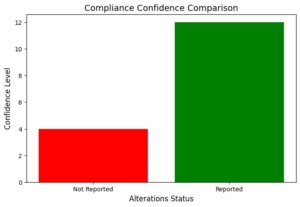
- Next, the chart illustrates the confidence level regarding compliance, according to reported changes and not reported changes.
- The Not Reported alterations are represented with a reduced confidence level as signified by a shorter bar (red).
- Alterations that were reported exhibit greater certainty, as evidenced by the taller (green) bar.
- From the graph, it can be seen that changes to the reports normally result in a higher level of confidence in the procedure.
- The simplified image shown demonstrates the results of administration which usually happens when more confidence is derived from the transparency and reporting.
Practical example
A vessel’s owner having increased the deck of the vessel fails to notify the authorities. At the time of inspection, the measurements do not correspond with the registry records, leading to a hold-up. Another owner who has carried out alterations notifies the authorities immediately and the inspection is carried out without a hitch.
This demonstrates the advantages of using pre-emptive reporting to avert complications.
Practical Steps for Reporting Vessel Alterations
Preparations to Manage Alterations of Registered Vessel is possible only with due consideration. Owners should be encouraged to determine if a change involves registered particulars. If there is uncertainty, they should check if particulars apply in this case.
Provide clear documentation of changes. Descriptions and measurements are accurate to expedite reviews. The record is consistent.
Timely submission of alteration updates is crucial upon completion of alterations. Any delay leads to compliance risk and additional administrative efforts.
Keep records of updates confirmation. These are guarantees when the property undergoes checking or selling. Documented things are easier to look into for future purposes.
Helpful best practices include:
- Assess whether changes affect registry details
- Measure and document alterations accurately
- Submit updates promptly after modifications
- Keep confirmation records securely
These steps support smooth compliance.
Why Reporting Alterations of Registered Vessel Matters
Changes to a Registered Vessel of National Vessel Registry Center, Corp. must be notified to ensure reliable and legitimate registry information. Modifications to the structure or mechanism change the continuance and identity of a vessel. Un-notified changes pose compliance threats and lead to risks and delays.
Reporting alterations requirements will lead to the understanding of owners that notify changes in the status and/or condition of the vessel protects the asset and investment. Having precise and reliable records will facilitate inspections and any future vessel transfers and operations. Corresponding reporting of alterations will help prevent unnecessary pressure and burden on administrative staff. Adequate reporting will allow the registry to retain updated records and the vessels to uphold legal recognition and operability.
