
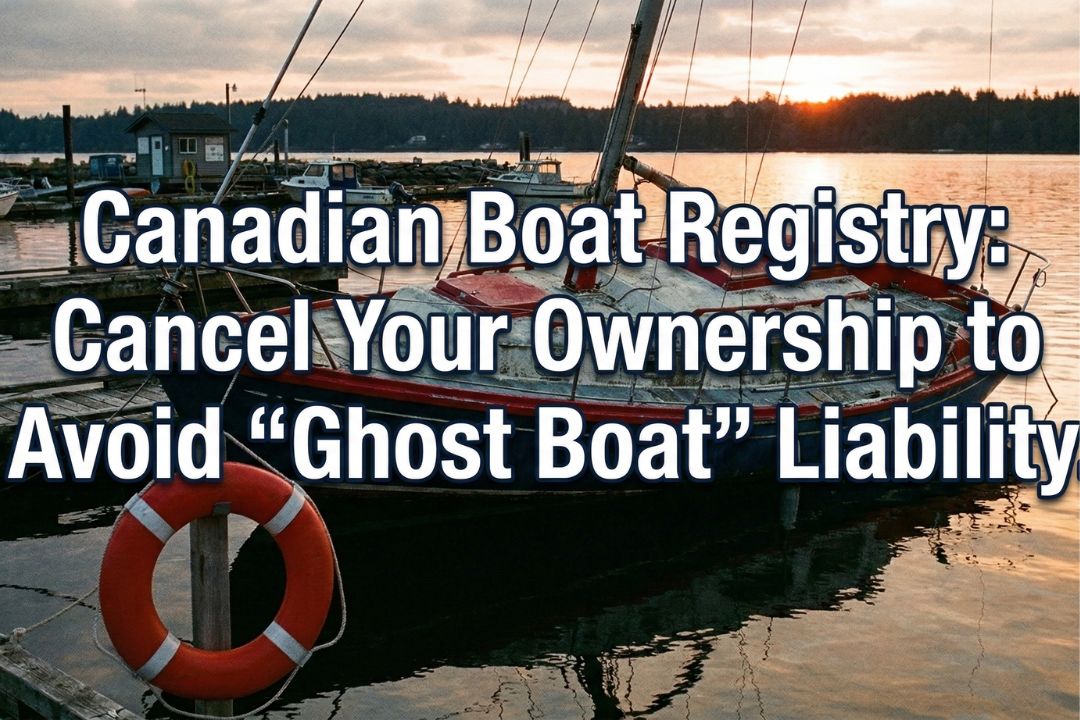
For many boat owners, selling, scrapping, or losing a boat feels like the end of the story. Often, there is one more step. If your name remains attached to a listing in the Canadian boat registry, you may still carry legal and financial responsibilities long after the boat is gone.
This situation can lead to what many people call a “ghost boat” problem, where a boat continues to exist on record even though the owner believes the relationship ended years earlier.
Use this link to cancel your registry.
The consequences can be serious. Environmental cleanup costs, marina disputes, and even legal claims can follow the person whose name remains tied to the boat’s registration. Canadian maritime regulations place clear obligations on owners to update or cancel registry records in specific situations.
Mandatory Cancellation After a Total Loss
A registered boat cannot remain on record indefinitely when it no longer exists or when it permanently leaves Canadian jurisdiction. Transport Canada rules outline specific circumstances where cancellation of registration must occur.
These requirements exist to ensure that registry records remain accurate and that responsibility for a boat is clearly documented.
Situations where cancellation is required include:
- A boat that has been destroyed by fire, severe storm damage, or sinking
- A boat that has been dismantled or permanently scrapped
- A boat that has been exported and will be registered in another country
These obligations exist under Canadian maritime regulations governing boat registration.
When one of these scenarios occurs, the owner must formally notify the Chief Registrar. Leaving a listing active in the Canadian boat registry can create confusion about ownership and liability.
The Sunk or Destroyed Boat
A catastrophic loss may feel like the end of a boat’s story, but registry records must still be updated.
Transport Canada requires owners to report when a registered boat is completely destroyed or lost. This includes situations such as:
- Fires that leave the boat beyond repair
- Severe storm damage that results in a total loss
- Sinkings that make recovery impossible
When this happens, owners must notify the authorities within a defined timeframe. This requirement ensures that the Canadian boat registry accurately reflects the status of the boat and prevents inactive listings from remaining attached to an owner’s name.
Scrapped Boats and Certificates of Disposal
Disposing of a boat often involves dismantling it and sending the remaining materials to a landfill or marine recycling facility. When that occurs, documentation of disposal becomes essential.
A proper record trail protects the former owner and demonstrates that the boat no longer exists.
Typical documentation includes:
- A signed receipt from a disposal facility
- Written confirmation that the boat has been dismantled
- A certificate issued by the yard or recycling centre
These records establish that the boat has been permanently removed from service.
Maintaining this documentation is important because registry records do not automatically disappear when a boat is scrapped. The cancellation must still be formally filed so the Canadian boat registry reflects the change.
Through our portal, owners can access the relevant forms used to notify Transport Canada about the disposal and submit supporting documentation.
Exported Boats Must Leave the Canadian Registry
Another situation requiring registry deletion occurs when a boat is sold to a buyer outside Canada.
A boat cannot remain in the Canadian registry while simultaneously being registered in another country. Before a foreign registration can take place, the Canadian entry must be removed.
Examples include:
- A sale to a buyer in the United States
- A transfer to a purchaser in Europe or another international jurisdiction
- Permanent relocation of the boat outside Canada
Before the foreign registry process begins, the Canadian listing must be cancelled through the appropriate Transport Canada procedure.
Our portal provides access to the form required for registry deletion so owners can formally notify the registrar when a boat leaves the country.
Acting within the required timeframe prevents registry records from remaining outdated and reduces the risk of ongoing responsibility tied to a listing in the Canadian boat registry.
Documentation Expectations
Owners sometimes believe that a written statement or informal notice is enough to satisfy registry requirements.
However, the Chief Registrar generally requires specific forms that clearly record the change.
Supporting materials may include:
- Disposal receipts from recycling facilities
- Proof of export or sale to a foreign buyer
- Documentation confirming total loss
Providing clear documentation ensures the registry can update its records quickly and accurately.
Differences Between the Large Vessel Registry and the Small Vessel Register
Canada maintains more than one type of registration framework for boats.
These include the Large Vessel Registry and the small vessel register. The process for cancelling an entry can vary depending on which system the boat appears in.
Ensuring that the correct registry entry is cancelled helps keep ownership records accurate within the Canadian boat registry.
For the small vessel register:
- Many updates are handled digitally
- Notification forms may be submitted electronically
For boats listed in the Large Vessel Registry:
- Additional documentation may be required
- The original Certificate of Registry may need to be surrendered
Our portal provides access to the forms associated with both registry systems so owners can submit the appropriate documentation.
Boat Registration Transfer vs. Registry Cancellation
Not every ownership change requires deletion from the registry. In some situations, a boat may remain in Canada but change owners.
When that occurs, a boat registration transfer may be required instead of cancellation.
A transfer is appropriate when:
- A boat is sold to another Canadian owner
- Ownership changes through inheritance
- A corporation or partnership becomes the new registered owner
When ownership transfers are not completed properly, the previous owner may remain listed in the registry.
Our portal provides access to the forms used for these transactions, allowing owners to record the change officially.
Failure to complete a boat registration transfer can leave the previous owner exposed to potential liability tied to the boat’s future activities.
Pleasure Craft Licence Records and Ownership Changes
Some boats in Canada operate under a pleasure craft licence rather than registry documentation.
These two systems serve different purposes and follow different regulatory processes.
A pleasure craft licence typically applies to certain recreational boats powered by engines above a specified horsepower threshold.
Our portal also provides access to forms associated with licence updates so owners can keep their records current.
Maintaining accurate licence information prevents confusion about who is responsible for a boat operating on Canadian waters.
The “Ghost Boat” Liability Risk
The phrase “ghost boat” refers to a situation where a boat continues to appear in registry records long after the original owner believes it has been sold or disposed of.
This situation can occur when:
- A boat was sold informally without completing the official transfer
- A marina abandoned the boat after storage fees went unpaid
- A damaged boat was left behind without formal disposal documentation
In these cases, registry records may still list the previous owner as responsible.
That is where serious liability can emerge.
If a neglected boat sinks or leaks fuel into a harbour, the registered owner may be contacted first regarding cleanup costs.
These incidents are not rare. Abandoned boats can deteriorate quickly, especially in harsh weather conditions.
Environmental Enforcement and Tracking in 2026
Authorities now have more tools than ever to track problematic boats.
Modern monitoring techniques include:
- High-resolution satellite imagery
- Provincial marina audits
- Environmental enforcement investigations
- Reports from harbour authorities
These systems help identify boats that appear abandoned, deteriorated, or potentially hazardous.
When a problematic boat is identified, investigators often begin by checking registry records.
If the Canadian boat registry lists a specific owner, that individual may receive the initial notification regarding the situation.
Environmental response costs can be substantial.
Cleanup operations involving fuel removal, salvage operations, and environmental mitigation may exceed thousands per incident.
Those expenses may ultimately be directed toward the person whose name remains associated with the registry entry.
Proper Documentation When Disposing of a Boat
Maintaining a clear paper trail protects former owners from being connected to boats that no longer exist.
When disposing of a boat, owners should obtain documentation that confirms the disposal process.
Recommended records include:
- Written receipts from the dismantling facility
- Confirmation that the hull and major components were destroyed
- A dated statement identifying the facility that handled the disposal
These records can support a registry deletion request and demonstrate that the boat has been permanently removed from service.
Our portal allows owners to access the forms used to submit registry updates along with supporting documentation.
Accessing Registry Forms Through Our Online Portal
Boat owners sometimes face delays when searching for the correct paperwork needed to update registry records.
Our online portal provides a centralized place where these forms can be accessed.
Through our service, users can find forms related to:
- Registry deletion requests
- Ownership updates
- Change notifications
- Other Transport Canada registry filings
Providing these forms online allows owners to take action promptly when changes occur.
Timely updates help ensure that records within the Canadian boat registry reflect current ownership and status information.
By keeping registry listings accurate, boat owners reduce the risk of being connected to a boat that no longer belongs to them or no longer exists.