
In Canada, when you buy a new boat, the boat licence will have to be transferred to you. When you buy or sell a licensed pleasure craft, a Transfer of Pleasure Craft Licence makes sure the official records match the new owner. Many boat owners overlook this obligation and assume that the vessel’s licence remains in place. If there was a transfer of title, there won’t be any issue of compliance or liability.
A boat licence connects an individual to their boat for identification and safety reasons. The authorities might reach the wrong person because the records are not updated on time. This may lead to misunderstanding, tardiness or enforcement action. The buyers and sellers are protected by the completion of the transfer.
Get familiar with the transfer of pleasure craft licence in detail. You will discover the significance, the workings of the process, and a comparison with other licensing measures. It contains practical tips to assist with the transfer in a smooth manner. Ultimately, you’ll learn how the proper transfer supports responsible and compliant ownership of a vessel.
Understanding the Transfer of Pleasure Craft Licence and Its Importance
When a vessel is sold, the Transfer of Pleasure Craft Licence updates the licence record. It guarantees the official association of the new owner with the vessel. This update is needed for safety, responsibility and compliance.
Even though the pleasure craft licence does not show ownership, it does identify who is responsible. This is used funding for enforcement and emergency sources. Confusion can occur with an expired licence.
When the transfer is completed, the seller no longer has responsibility for the vessel. For buyers, it establishes correct identification. Both parties gain from accurate records.
How the Licence Transfer Process Works
The transfer of a pleasure craft licence is a process. The buyer and seller enjoy a reciprocal position. Good communication between parties helps to avoid delays.
When a Transfer Is Required
The seller or person gifting the vessel must make a transfer. A change in ownership triggers the obligation. No transfer is required for temporary use.
It’s up to the new owner to transfer. Still sellers must verify completion. This keeps them safe from liability.
Required Information and Documentation
In order to complete the transfer, we’ll need the vessels identification details. Vessel details including the licence number. The details of the owner identification are required as well.
Ensuring accurate submission of details. Any errors in name of owner, vessel details will delay. Careful scrutinizing of information reduces problems.
Review and Confirmation
When you submit your request transfer will be reviewed. The turnaround time operates based on accuracy and volume. Returned submissions if not complete
Confirmation must be kept by the new owner. You should always keep updated license details. Compliance continues after authorization.
Common Challenges During Transfer
- Incomplete seller information
- Incorrect vessel licence number
- Delayed submission after purchase
- Assuming transfer is automatic
Smoother processing could be ensured by avoiding challenges. Devote Attention and Pay Attention to Detail.
Transfer of Pleasure Craft Licence Compared to Other Actions
Do not confuse applying for a new pleasure craft licence with transferring an existing one. Despite being similar, each serves a different purpose. Knowing the difference avoids wrong fillings.
| Action | Purpose | When Used |
|---|---|---|
| Licence Transfer | Update owner details | After sale or gift |
| New Licence | Create first record | Newly acquired vessel |
| Licence Update | Change vessel details | Specs or address change |
Compliance Risk Comparison
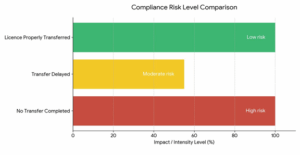
- Correctly transferring a licence – which puts your profile on Low Risk – maximizes protection from legal actions and prevents administrative stressors.
- The risk classification of a transfer utility is Moderate where there is an undue delay in allowing the transfer. So there will be uncertainty on the transfer taking place or identification.
- Failure to completely execute a transfer puts the owner in the High Risk zone, which means their liability and exposure to legal and admin issues are at maximum.
Practical Tips for a Smooth Licence Transfer
Make sure to finalize the transfer of pleasure craft licence as soon as ownership changes. If postponed, there is more non-compliance. Acting quickly makes it easier.
Verify the accuracy of all seller and buyer information. Confirm names, addresses and vessel details Uniformity in words counts and tone matters.
Retain copies of all transfer confirmations. Proper documentation prevents more disputes.
Best Practices to Follow
- Confirm vessel licence number before purchase
- Submit transfer promptly after sale
- Verify all owner details carefully
- Retain confirmation records securely
Following these practices ensures a smooth transition. Prepared owners avoid unnecessary complications.
Ensuring Compliance Through Proper Licence Transfer
Transferring Pleasure Craft Licence is essential for responsible boat ownership at National Vessel Registry Center, Corp. It ensures official documents show the right owner. Accurate transactions enhance safety, enforcement, and accountability.
Comparative data and practical tips helped understand easily. These steps empower boat owners. A correct transfer decreases the hazard and enhances security when boating. Responsible ownership starts with appropriate and on-time licensing.
