
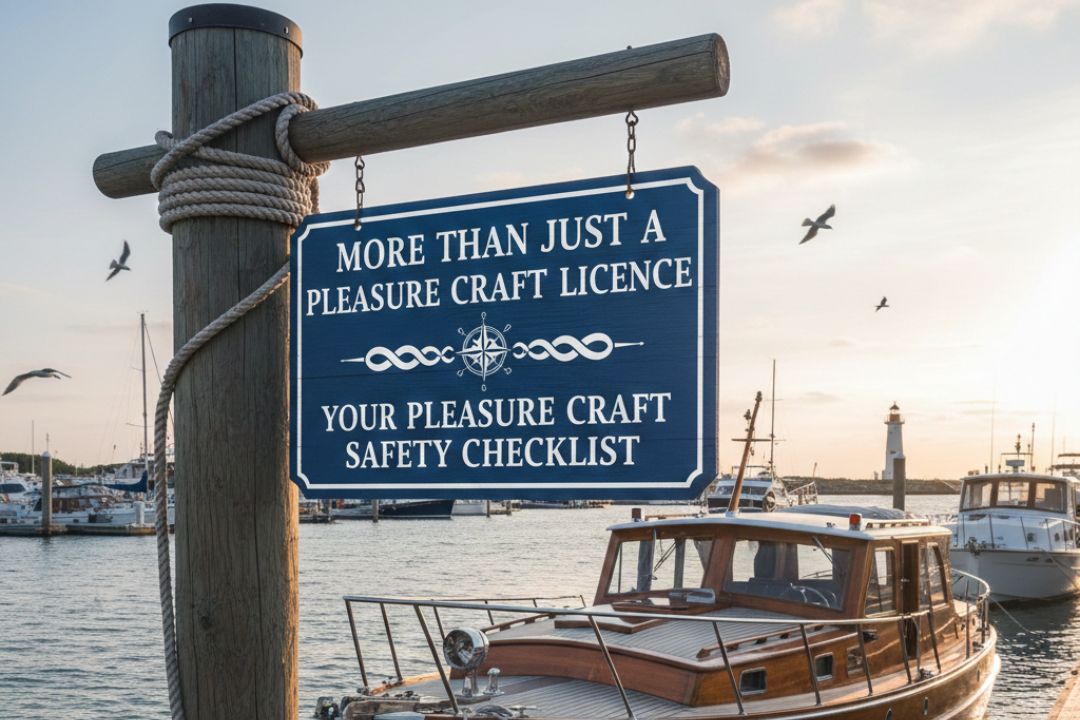
Transport Canada has made it clear that safety and accurate information are inseparable. Proper pleasure craft licence compliance, equipment rules, and pre-departure practices are now directly tied to search and rescue outcomes, enforcement priorities, and how quickly help reaches you when something goes wrong.
This checklist reflects the latest federal direction and shows how our service supports compliance without complicating your boating plans.
The 2026 Regulatory Pivot for Canadian Boat Owners
On January 6, 2026, Transport Canada formally modernized the national licencing framework for pleasure craft. These changes were not cosmetic updates. They reshaped how federal authorities connect boat identification, owner information, and emergency response.
Some of the changes affecting boat owners include:
- A standardized five-year term for licencing
- A $24 federal fee tied to licence maintenance
- Increased emphasis on keeping owner and boat details current
- Greater enforcement attention during inspections and safety stops
The updated approach recognizes that outdated records can slow emergency response and increase risk on Canadian waters. When a boat description, ownership record, or contact detail is inaccurate, search teams may be looking for the wrong boat entirely.
Our service supports these updates by providing direct access to the correct Transport Canada forms in one place. Always, our portal reduces confusion and helps you submit accurate information without unnecessary delays.
Safety Data and Search and Rescue Readiness
Transport Canada has been clear about the intent behind the 2026 changes. The licencing system now functions as a safety tool, not just an administrative record. Search and rescue teams rely on licence data to confirm:
- Hull colour and design
- Boat length and propulsion type
- Registered home port
- Emergency contact information
If any of this information is outdated, response teams may lose critical time. A white boat cannot be located if records still describe it as red. A relocated marina can send responders miles in the wrong direction.
Keeping your pleasure craft licence current is now directly tied to safety outcomes. Our portal makes it easier to locate the appropriate update forms and submit changes promptly, supporting Transport Canada’s safety-first approach.
Pre-Departure Safety Alerts for 2026
Transport Canada has clearly laid out what’s to be expected for “maintaining a safe pleasure craft.” Before leaving the dock, Canadian boat owners are expected to evaluate more than weather conditions. Transport Canada’s guidance highlights recurring causes of distress calls and preventable incidents.
Fuel Planning and the Rule of Thirds
Fuel-related issues continue to account for nearly half of rescue calls nationwide. Rising fuel costs in 2026 have led some boaters to push limits, especially on longer routes across the Great Lakes or along the Atlantic and Pacific coasts.
Transport Canada recommends:
- One-third of fuel for outbound travel
- One-third reserved for the return
- One-third held as emergency reserve
Stretching fuel supplies increases the likelihood of drifting, engine shutdowns, and hazardous anchoring in poor conditions. Fuel planning is now viewed as a safety obligation, not a personal choice.
Mechanical Readiness and Federal Enforcement
Operating an unseaworthy boat has moved beyond negligence into enforceable federal violations. The 2026 framework clarifies that knowingly launching with mechanical deficiencies may result in penalties.
Before departure, boat owners should confirm:
- Steering systems respond correctly
- Bilge pumps function as designed
- Engine cooling systems are clear
- Navigation lights are operational
Mechanical failure no longer excuses unsafe operation. Inspections increasingly assess whether reasonable steps were taken to verify readiness.
Mandatory Safety Gear Under the 2026 Standards
Transport Canada’s equipment standards remain size-specific, but enforcement has tightened around condition and accessibility. Equipment must be usable, compliant, and appropriate for your boat’s dimensions.
Lifejackets and Personal Flotation Devices
All lifejackets and PFDs must be Canadian-approved and maintained in good condition. Inspectors now routinely check for:
- Broken or missing buckles
- Faded or unreadable approval labels
- Improper sizing for passengers on board
Damaged gear may be treated as non-existent during an inspection.
Visual Distress Signals
For boats over six metres, a watertight flashlight alone is no longer sufficient. Transport Canada requires:
- Six approved flares
- Type A, B, or C flares accepted
- Flares stored in accessible locations
Expired or damaged flares may result in compliance issues even if replacements are onboard but inaccessible.
Communication Equipment Expectations
While not universally mandatory, Transport Canada strongly recommends enhanced communication tools in 2026. Cellular coverage remains unreliable across many Canadian waterways. Recommended options include:
- Marine VHF radios
- Registered personal locator beacons
- Fixed or handheld units suited to operating area
Reliable communication can significantly reduce rescue response times during emergencies.
Licencing, Registration, and Legal Distinctions
It is essential to distinguish between licencing and registration systems in Canada. A pleasure craft licence is not the same as registration under the Small Vessel Register, and they serve different legal purposes.
Licencing generally applies to most pleasure boats powered by engines of ten horsepower or more, while registration involves ownership proof, title interests, and recorded history. Understanding which system applies to your boat helps avoid compliance issues.
Boat owners navigating these requirements often also choose to check boat history before purchasing or transferring ownership. Registration records provide insight into liens, name history, and prior registrations, while licencing focuses on operational identification.
You can review the governing framework through Canadian maritime laws to better understand how federal rules apply to your boat.
How Our Portal Supports Ongoing Compliance
We operate as an online access point for official Transport Canada forms related to Canadian boat registration and licencing. Our service is designed to reduce friction, not replace federal processes.
Through our portal, boat owners can:
- Access current licencing forms
- Locate registration-related paperwork
- Submit updates using official formats
- Avoid outdated or incorrect documents
Pleasure Craft Licence Maintenance Over Time
Compliance is not a one-time task. Situations requiring updates include:
- Moving to a new marina or province
- Repainting or refitting the boat exterior
- Selling or transferring ownership
- Changing emergency contact details
Completing a pleasure craft licence renewal on time ensures your information remains active in the federal database and reduces the risk of enforcement issues during inspections.
Wind-Powered Boats and the 2027 Update
Transport Canada announced a significant expansion to licencing requirements beginning in December 2027. Wind-powered pleasure craft over six metres will be required to hold a pleasure craft licence.
This change reflects increased traffic, mixed-use waterways, and safety data involving sail-powered boats. Sailors should begin preparing early by reviewing safety equipment, communication tools, and licencing requirements well ahead of enforcement dates.
Our portal will continue to provide access to the appropriate forms as these changes take effect, helping sailors adapt without last-minute stress.
Safety as an Ongoing Practice
Transport Canada’s 2026 direction reframes safety as a continuous responsibility rather than a checklist completed once per season. Accurate licencing data, properly maintained equipment, and informed decision-making all contribute to safer waterways.
By offering centralized access to official forms for licencing, registration, and updates, our service supports responsible boating without adding unnecessary complexity.
A pleasure craft licence now represents more than identification. It connects safety planning, legal compliance, and emergency readiness into a single federal framework that benefits everyone on the water.