
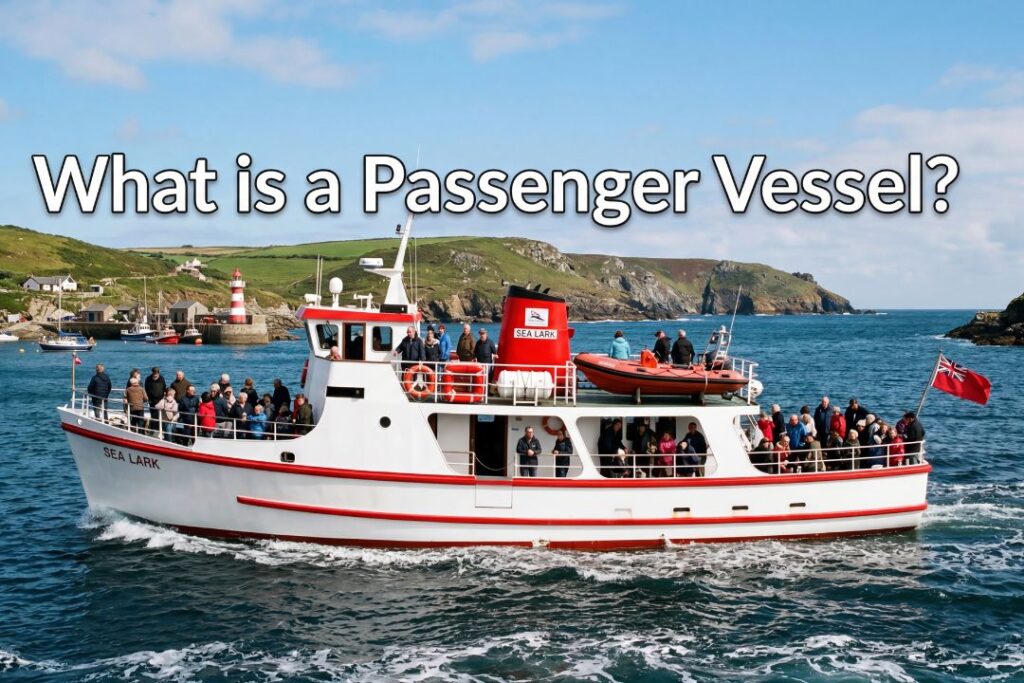
A passenger vessel is any boat that carries at least one individual who is not the master or a member of the crew, as defined under Canadian law. In practical terms, if your boat carries even a single paying guest, client, or visitor, it may be classified as such and subject to specific safety, registration, and operational rules. This classification comes from federal legislation and applies broadly across commercial activities on the water.
The Legal Definition (The “What”)
Under the Canada Shipping Act, 2001, a passenger vessel is defined in a straightforward way:
- A boat becomes this if it carries at least one passenger
- A passenger is anyone who is not:
- The master (captain)
- A crew member
- Someone employed or engaged in the operation of the boat
This means that even informal or occasional operations can fall into this category. For example:
- A fishing charter with one paying client
- A tour boat offering sightseeing experiences
- A water taxi transporting a single rider
All of these situations can trigger passenger vessel classification.
You can review the legal framework directly here.
What Counts as a Passenger?
Passengers are typically:
- Paying customers
- Guests on board for recreational purposes
- Individuals not involved in operating the boat
They are not:
- Crew members assigned duties
- The owner acting as the operator
- Workers performing tasks related to the boat’s function
The “12 Passenger” Threshold
Why the Number 12 Changes Everything
One of the most significant regulatory thresholds in Canada is the 12-passenger limit. Once a passenger vessel carries more than 12 passengers, it enters a much stricter regulatory category.
Boats carrying 12 passengers or fewer are generally considered small commercial vessels. These still have requirements, but they are more flexible.
Boats carrying more than 12 passengers must meet enhanced standards, including:
- Formal inspections by Transport Canada
- Annual certification requirements
- More detailed construction and stability standards
- Additional safety equipment mandates
- Stricter crew training and certification
Operational Differences Based on Capacity
For boats with 12 passengers or fewer:
- Compliance is often managed through programs like the Small Vessel Compliance Program
- Inspections are less frequent or self-managed
- Documentation requirements are more streamlined
For boats with more than 12 passengers:
- Certification must be maintained and renewed annually
- Inspections are mandatory and detailed
- Design and engineering standards are higher
- Operating costs and compliance responsibilities increase
How This Affects Your Planning
If you are operating close to the 12-passenger limit, even a small increase in capacity can:
- Change your compliance obligations
- Increase operational costs
- Require different registration pathways
Tonnage and Registration Categories
Small Vessel Register vs. Large Vessel Register
In Canada, registration depends not only on how a boat is used but also on its size, specifically its gross tonnage.
Small Vessel Register
This register is generally used for boats that are:
- 15 gross tons or less
- Used commercially, including as a passenger vessel
Common examples include:
- Water taxis
- Small fishing charters
- Local tour boats
Characteristics:
- Faster and simpler registration process
- Suitable for many small-scale operators
- Ideal for businesses offering limited passenger capacity
If your boat is already listed, keeping your records current may involve a small boat registration renewal to maintain compliance.
Large Vessel Register
This register is required when:
- The boat exceeds 15 gross tons
- The owner wants to register a marine mortgage
Typical uses include:
- Larger tour boats
- Ferries
- Commercial passenger operations with higher capacity
Characteristics:
- More detailed registration requirements
- Formal ownership documentation
- Eligibility for financing through marine mortgages
Registration Is Not the Same as Licensing
It is important to distinguish between registration and a pleasure craft licence.
- A pleasure craft licence applies to recreational boats only
- It does not apply to boats used as a passenger boat
- Commercial use requires proper registration, not licensing
Keeping Records Up to Date
Changes in ownership or structure may require:
- A small boat registration transfer
- Updates to registration details
- Ongoing compliance with federal requirements
For operators managing commercial activities, staying current with these processes ensures uninterrupted operations.
The Small Vessel Compliance Program (SVCP)
What the SVCP Offers
The Small Vessel Compliance Program is designed to help operators of small commercial boats meet safety requirements without undergoing constant formal inspections.
This program is especially relevant for boats:
- Carrying 12 passengers or fewer
- Operating in nearshore or sheltered waters
- Used for charters, tours, or transport services
Features of the SVCP
Participants in the program receive:
- A blue decal indicating compliance
- Guidance on meeting Transport Canada standards
- A structured checklist for safety practices
How the Program Works
Instead of relying solely on inspections, the SVCP emphasizes:
- Self-assessment
- Documentation of safety measures
- Ongoing adherence to established guidelines
Operators are expected to:
- Review safety requirements regularly
- Maintain proper equipment
- Keep records of compliance
Benefits for Operators
Joining the SVCP can provide:
- Greater operational flexibility
- Reduced need for frequent inspections
- Clear benchmarks for safety
It also signals to passengers that the boat meets recognized safety standards.
Mandatory Safety Equipment & Crew Certification
Core Safety Equipment Requirements
Every passenger vessel must carry essential safety equipment appropriate to its size and operating area.
Common requirements include:
- Lifejackets or personal flotation devices for every person on board
- Visual distress signals such as flares
- Fire extinguishers
- Sound-signaling devices
- Navigation lights
Depending on where the boat operates, additional equipment may be required:
- Life rafts for offshore or extended voyages
- Emergency position-indicating radio beacons (EPIRBs)
- First aid kits with marine-specific supplies
Equipment Based on Operating Area
Safety requirements vary depending on:
- Distance from shore
- Water conditions
- Number of passengers
For example:
- Inland operations may have fewer requirements
- Coastal or offshore operations require more advanced equipment
Crew Certification Requirements
Operating a passenger vessel is not just about the boat—it also depends on the qualifications of the crew.
The captain typically needs:
- A Small Vessel Operator Proficiency (SVOP) certificate
- Marine Emergency Duties (MED) training
- Valid first aid certification
Additional crew may also require:
- Safety training
- Role-specific certifications
Ongoing Compliance and Renewals
Maintaining compliance includes:
- Keeping certifications current
- Updating safety equipment as needed
- Completing a Canada boat registration renewal when applicable
These steps ensure that both the boat and its operator remain legally compliant.
How We Support Passenger Vessel Registration and Compliance
Simplifying the Process
Our service is designed to make it easier to manage the administrative side of operating a passenger vessel.
We provide:
- Access to official forms for registration
- Streamlined submission processes
- Support for updating records
Handling Registration
We assist with:
- Initial registration in the appropriate registry
- Updates to ownership or boat details
- Filing for a small boat registration transfer
We do not gather your documents for you, but we make it easier to use the documents you already have to complete your application correctly.
Keeping Your Boat Operational
Staying compliant involves more than a one-time filing. We help you:
- Maintain current registration status
- Navigate renewal requirements
- Ensure your records align with federal standards
By focusing on accessibility and efficiency, our service supports operators at every stage of their journey.