
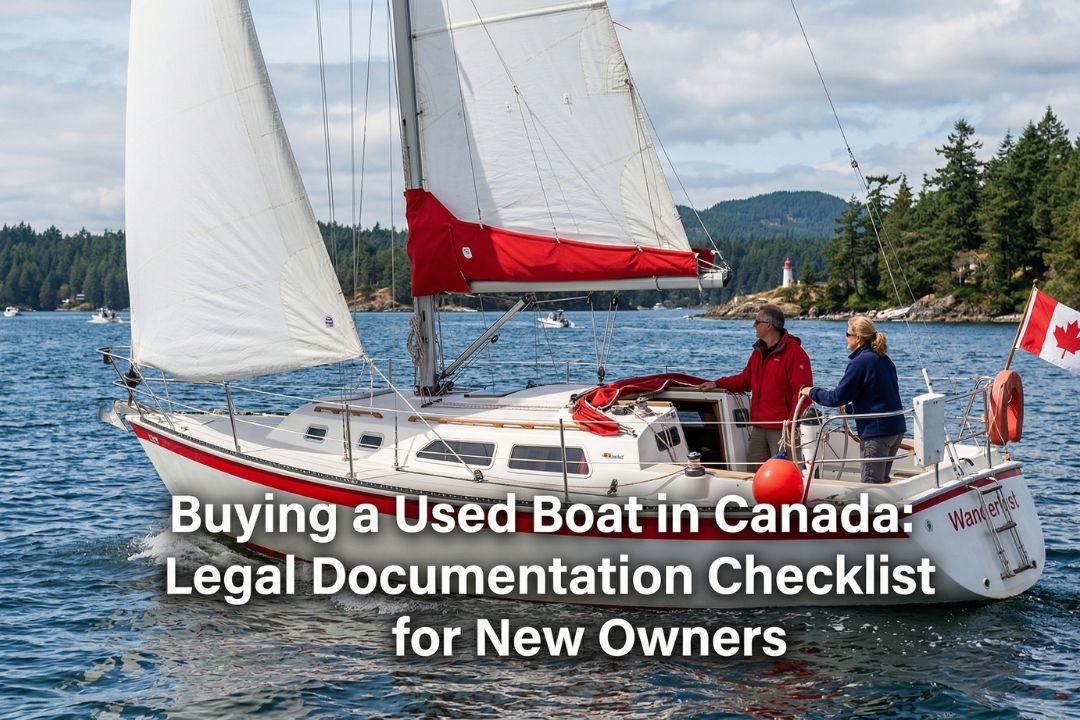
Buying a used boat can feel like a straightforward transaction, right until the paperwork begins. From ownership records to regulatory compliance, every detail must align with Canadian requirements. That’s why having the right checklist is essential, especially when it comes to securing proof of ownership for a boat in Canada and completing your transfer correctly through Transport Canada.
Without the proper documentation, even a great deal can turn into a complicated legal situation.
At the National Vessel Registry Center Corp., our service simplifies access to the official forms and filing pathways you need.
The Ownership Trail You Can’t Afford to Ignore
One of the most overlooked issues in used boat purchases is a broken chain of ownership. It’s more common than many buyers realize.
Imagine purchasing a boat from a seller who appears legitimate, only to discover later that Transport Canada records list a completely different owner. This happens when prior ownership transfers were never properly documented.
To avoid this situation, ensure there is a complete chain of title:
- The seller must match the name on the current licence or registration
- If not, you must obtain Bills of Sale from every previous transaction
- Each document should clearly connect one owner to the next
- Any missing link can delay or invalidate your transfer
Without this continuity, your proof of ownership for a boat in Canada may not be accepted. This can prevent you from registering or licencing the boat in your name.
What Makes a Bill of Sale Valid?
A Bill of Sale is more than a receipt. It is one of the core documents used to establish legal ownership.
For certain boats—especially those that are registered rather than licenced—Transport Canada requires a specific format known as Form 6.
Here’s what must be included:
- Full legal names of buyer and seller
- The complete Hull Serial Number (HIN)
- Date of sale and purchase price
- The number of shares being transferred (typically 64 out of 64)
- Signatures from all involved parties
While informal documents may sometimes be accepted for a pleasure craft licence, they are not sufficient for boats listed in the small vessel register or those used commercially.
If your Bill of Sale is incomplete or inaccurate, your application may be rejected. That means delays, additional filings, and potential complications in establishing proof of ownership for a boat in Canada.
Does Your Bill of Sale Have a HIN?
The Hull Serial Number is one of the most critical identifiers in any boat transaction.
Since 1981, all boats manufactured in Canada or imported into the country must have a 12-character HIN. This number is permanently affixed to the hull and serves as the boat’s unique identifier.
When reviewing your documents, check for the following:
- The HIN on the boat matches the HIN on the Bill of Sale
- The number is clearly legible and complete
- There are no discrepancies between documents
If you are purchasing an older boat that does not have a HIN, additional steps are required before ownership can be finalized.
Without a valid HIN, your application for proof of ownership for a boat in Canada cannot proceed.
These may include:
- Submitting a request for a new HIN
- Providing supporting details about the boat’s origin
- Waiting for Transport Canada to assign and approve the number
Operating During the 90-Day Window
Canadian regulations provide a short-term allowance for new owners who are in the process of transferring ownership.
Under the Small Vessel Regulations, you may operate your boat for up to 90 days after purchase, provided certain conditions are met.
These include:
- Carrying a valid Bill of Sale on board at all times
- Ensuring the document clearly shows transfer of ownership
- Submitting your transfer application within the allowed timeframe
For buyers eager to get out on the water, this rule provides peace of mind while still reinforcing the need to secure proper proof of ownership for a boat in Canada as soon as possible.
This grace period offers flexibility, but it is not a substitute for completing your paperwork. If you are stopped during this time, your documentation must be readily available.
Checking for Outstanding Debts Before You Buy
A Bill of Sale confirms that a transaction took place. It does not confirm that the boat is free of financial obligations.
For boats listed in the small vessel register, ownership records do not automatically reveal whether there is an outstanding loan or lien attached.
To protect yourself, request a Transcript of Registry.
This document provides:
- A full ownership history
- Details of any registered mortgages
- Confirmation of current ownership status
Think of it as a background check for the boat. Without it, you risk inheriting someone else’s debt.
When reviewing documentation, remember:
- A clean Bill of Sale does not guarantee a clean title
- A Transcript verifies that the seller has the legal right to transfer ownership
- Both documents work together to establish proof of ownership for a boat in Canada
Before completing your purchase, make sure you have reviewed all relevant records.
Don’t Hand Over Payment Without These Documents
Before finalizing any used boat purchase, ensure you have reviewed three items:
- A complete and accurate Bill of Sale
- Verified Hull Serial Number documentation
- A current Transcript of Registry (if applicable)
Skipping any of these steps can lead to serious complications.
Even if the deal seems urgent or the seller appears trustworthy, taking the time to verify documentation is essential. Once payment is made, resolving missing or incorrect paperwork becomes much more difficult.
How Canadian Maritime Laws Apply to Your Purchase
Boat ownership and registration in Canada are governed by specific federal regulations. These rules outline how ownership is transferred, how boats are identified, and what documentation is required.
Buyers should familiarize themselves with applicable requirements through official sources such as Canadian maritime laws.
These regulations affect:
- Ownership transfers
- Identification requirements
- Licensing and registration obligations
- Enforcement and compliance standards
Failing to meet these requirements can result in penalties or delays in processing your application.
Our platform provides direct access to the forms required under these regulations, helping you align your application with current legal standards.
When a Pleasure Craft Licence Comes Into Play
For many recreational boats, a pleasure craft licence is required rather than formal registration.
This licence includes:
- A unique identification number displayed on the boat
- Owner information recorded with Transport Canada
- Compliance with size and use requirements
It is important to note that licencing is not the same as registration.
Licencing typically applies to:
- Boats powered by engines of 10 horsepower or more
- Recreational use only
- Domestic operation within Canadian waters
Even in these cases, you still need valid proof of ownership for a boat in Canada to complete the transfer.
Canada Boat Registration for Larger or Commercial Boats
Certain boats must be formally registered rather than licenced. This applies to boats used for commercial purposes or those financed through marine lenders.
Canada boat registration involves:
- Listing the boat in an official registry
- Assigning ownership shares
- Recording mortgages and liens
Registered boats are subject to stricter documentation requirements, including the use of Form 6 for ownership transfers.
If your purchase falls into this category, ensuring accuracy in every document is critical. Any discrepancy can delay approval or require resubmission.
Registration Renewal and Ongoing Compliance
Ownership documentation does not end after your initial transfer is complete.
In some cases, you may need to complete a registration renewal to maintain compliance with Transport Canada requirements.
Keeping your records current ensures that your proof of ownership for a boat in Canada remains valid over time.
This process may involve:
- Updating ownership details
- Confirming continued eligibility
- Submitting renewal forms within specified timelines
How Our Service Supports Your Filing Process
At the National Vessel Registry Center Corp., we focus on making official forms and filing pathways accessible online.
Through our platform, you can:
- Access Transport Canada forms quickly
- Submit applications through a streamlined process
- Avoid confusion about which documents are required
We do not collect your documents or prepare them for you. Instead, we provide the tools that allow you to use your existing paperwork efficiently within the proper system.
This approach reduces friction and helps you move forward without unnecessary delays.
Practical Tips for a Smoother Transaction
When preparing to buy a used boat, a few practical steps can make the process far easier:
- Always verify the seller’s identity against official records
- Double-check every document for accuracy before signing
- Keep copies of all paperwork for your records
- Submit your transfer application as soon as possible
- Use official forms to avoid rejection
More Than Just Proof of Ownership for a Boat in Canada
A used boat purchase should be exciting and not a source of uncertainty. By focusing on documentation from the start, you can avoid common pitfalls and ensure your ownership is properly recognized.
From verifying the chain of title to confirming the HIN and reviewing registry transcripts, every step plays a role in protecting your investment.
Each of these actions supports your ability to establish proof of ownership for a boat in Canada without complications.
With access to the right forms and a clear understanding of requirements, you can complete your transaction with clarity and then get out on the water knowing everything is in order.