
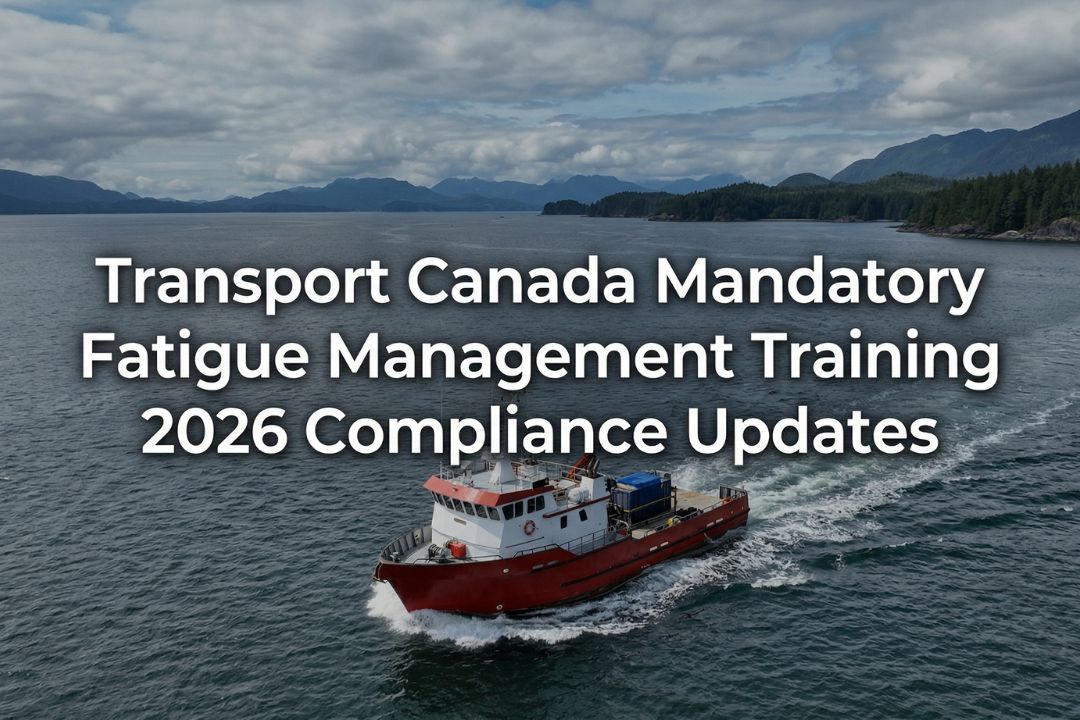
2026 Transport Canada fatigue training has changed dramatically. These changes directly impact how commercial operators approach scheduling, certification, and safety culture onboard. As Transport Canada tightens oversight on crew fatigue, maintaining a valid status on the Canadian Vessel Registry remains the first step in commercial compliance.
These new rules set a clearer standard for how fatigue risks are identified and mitigated across regulated operations.
Essential Changes to Marine Emergency Duties (MED) Enrollment
The 2026 update introduces a significant shift in how seafarers approach Marine Emergency Duties (MED) training. A new prerequisite has been added, requiring fatigue management education before certain MED courses can be completed.
This adjustment reinforces the growing recognition that fatigue is a critical factor in maritime incidents.
The New Prerequisite Requirement
Before enrolling in specific MED training programs, crew members must now complete an approved fatigue management course. This prerequisite ensures that safety training is grounded in real-world awareness of human limitations.
Elements of this requirement include:
- Completion of a Transport Canada-recognized fatigue management course prior to MED enrollment
- Proof of certification submitted during training registration
- Integration of fatigue awareness into emergency response readiness
- Standardized expectations across commercial operators
Who This Impacts Most
This means that 2026 Transport Canada fatigue training is no longer optional preparation—it is a gateway requirement for advancing in professional marine roles. The updated prerequisite primarily affects:
- Commercial fishing crews
- Passenger vessel operators
- Offshore and industrial marine workers
- Crew members on larger inspected boats
These roles often involve long shifts, unpredictable conditions, and extended deployments, making fatigue management essential for both safety and compliance.
While these fatigue mandates focus on Marine Emergency Duties (MED) for larger crews, owners of smaller workboats should ensure their documentation is current via the Small Vessel Register. This distinction helps clarify that not all operators face identical training requirements, but all must remain compliant within their operational category.
Operational Implications for Employers
Employers must now adjust hiring and training workflows to incorporate fatigue certification as a baseline requirement.
Consider the following adjustments:
- Updating onboarding processes to include fatigue training verification
- Scheduling MED courses only after prerequisite completion
- Maintaining records for audit and inspection purposes
- Communicating updated expectations to current crew
By integrating 2026 Transport Canada fatigue training into workforce planning, operators can avoid delays and ensure continuous compliance.
Accessing the Free CCOHS Fatigue Management Course
One of the most notable aspects of the 2026 update is that the required fatigue training is available at no cost through the Canadian Centre for Occupational Health and Safety (CCOHS).
This removes financial barriers and encourages widespread adoption across the industry.
Zero-Cost Training Availability
The CCOHS course is accessible online and designed to meet Transport Canada’s updated standards. This makes 2026 Transport Canada fatigue training both practical and scalable for operators of all sizes.
Features of the course include:
- No registration fee
- Self-paced learning modules
- Accessible from anywhere in Canada
- Certification upon completion
Canadian Requirements and Accessibility
To meet compliance standards, participants must:
- Complete the course through the official CCOHS platform
- Retain proof of certification
- Ensure the course aligns with Transport Canada guidelines
- Provide documentation when enrolling in MED programs
Because the course is standardized, it creates consistency across the marine workforce.
Practical Benefits for Crew Members
Beyond compliance, fatigue training offers tangible benefits:
- Improved awareness of sleep cycles and performance
- Better decision-making under pressure
- Reduced risk of accidents and near-misses
- Enhanced teamwork and communication
For crew members, completing 2026 Transport Canada fatigue training is not just about meeting a requirement—it’s about improving daily performance and long-term safety.
Recreational vs. Professional Distinction
It is important to note that these updates are aimed at professional seafarers operating in regulated environments.
While these 2026 updates target professional seafarers, recreational boaters should still maintain a valid pleasure craft licence to avoid fines during routine water safety checks. This ensures that even non-commercial operators remain compliant with applicable regulations.
Vessel Documentation and Crew Certification Alignment
Regulatory compliance does not exist in isolation. Crew certification and boat documentation must align to create a fully compliant operation.
This is where our service supports operators by simplifying access to registration and documentation processes.
Bridging Training and Registration
As fatigue management becomes a formal requirement, it must be reflected in operational records tied to each registered boat.
Operators should ensure:
- Crew certifications are current and verifiable
- Registration details match operational use
- Updates are filed promptly when changes occur
- Records are accessible during inspections
Using our platform for Canada boat registration helps maintain this alignment without unnecessary complexity.
New Crew and New Boat Considerations
When acquiring a new boat or onboarding new crew, timing is critical.
For those recently acquiring a ship, completing a transfer of vessel ownership promptly ensures that the new owner is the one receiving official Ship Safety Bulletins and regulatory updates.
This ensures that:
- Compliance updates reach the correct party
- Training requirements are communicated without delay
- Operational responsibilities are clearly defined
Incorporating 2026 Transport Canada fatigue training into onboarding ensures that new crew members meet current standards from day one.
Maintaining Compliance Across the Lifecycle
Compliance is not a one-time task. It evolves with regulatory updates, operational changes, and crew turnover.
Operators should regularly:
- Review registration status
- Confirm crew certifications remain valid
- Monitor updates from Transport Canada
- Align documentation with current operations
Our service makes it easier to manage these updates by providing streamlined access to the forms required for ongoing compliance.
Historical Compliance and Safety Records
Fatigue has long been recognized as a contributing factor in marine incidents, and regulators continue to refine their approach based on historical data.
Researchers looking into the safety records of specific hulls can utilize a historical vessel research request to track the compliance evolution of a particular ship.
This allows operators to:
- Review past incidents and corrective actions
- Identify trends in fatigue-related risks
- Strengthen safety protocols based on real data
For those looking to search the history of a boat, this type of research can provide valuable insight into how a boat has been managed over time.
Supporting Documentation Through Our Platform
Our role is to simplify access to the filings and forms required to keep your operation compliant. By integrating 2026 Transport Canada fatigue training into your broader compliance strategy, you create a safer and more efficient operation.
We provide:
- Easy access to registration and transfer forms
- Streamlined submission processes
- Support for maintaining accurate records
- Tools to keep documentation aligned with regulatory updates
Adapting to 2026 Transport Canada Fatigue Training
The introduction of fatigue management prerequisites signals a broader shift in how marine safety is approached in Canada. It reflects a move toward proactive risk management rather than reactive enforcement.
Operators who adapt early will benefit from:
- Reduced operational disruptions
- Improved crew performance
- Stronger compliance standing
- Enhanced safety culture
Important actions to take now include:
- Ensuring all applicable crew complete 2026 Transport Canada fatigue training
- Updating internal policies to reflect new requirements
- Aligning documentation with current regulations
- Utilizing online services to simplify compliance tasks
For commercial operators, staying ahead of these changes is essential for maintaining operational continuity and meeting regulatory expectations.
By combining proper training with accurate registration and documentation, you position your operation for long-term success in an increasingly regulated environment.