
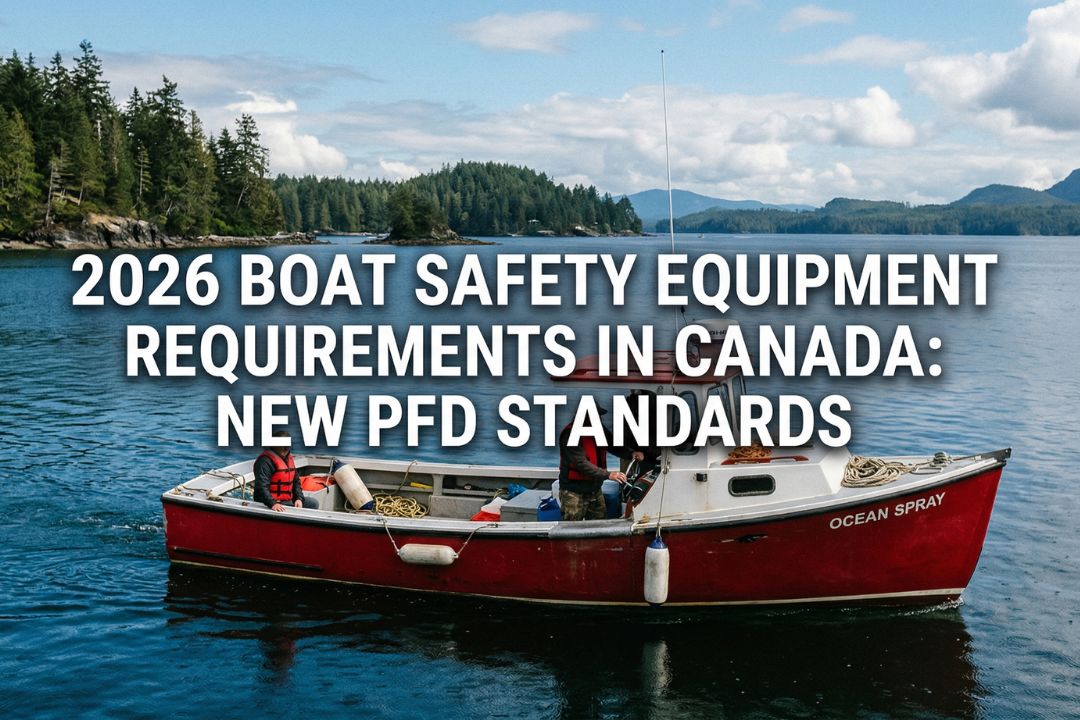
Staying ahead of vessel safety equipment requirements in Canada for 2026 is essential for a worry-free season. As these updates roll out, staying aligned with boat safety equipment requirements in Canada means looking beyond flotation devices and focusing on your boat’s full legal status.
However, safety gear is only one part of maritime compliance. Whether you are navigating coastal waters or local lakes, ensuring your boat’s registration is up to date is the only way to prove legal ownership and avoid costly delays during a routine inspection.
A Broader Look at Compliance in 2026
While new PFD performance levels are an important development, they are only one piece of a much larger regulatory picture. Canadian maritime enforcement does not separate safety equipment from documentation. During inspections, both are evaluated together.
Every boat in Canada is required to carry specific onboard equipment based on factors like:
- Overall length
- Engine type and propulsion
- Intended usage (recreational or commercial)
- Operating waters
With the recent formalization of the harmonized North American PFD standards (detailed in SSB No. 18/2025), boaters are seeing a shift from traditional ‘Types’ to ‘Performance Levels’ like Level 50, 70, and 100.
At the same time, officers verify that your paperwork is current and valid. This includes either registration or licencing, depending on your boat’s classification. Meeting boat safety equipment requirements in Canada without proper documentation still leaves you exposed to penalties.
How Safety Gear and Legal Status Work Together
Safety gear protects you physically. Documentation protects you legally. Both must be aligned before you launch.
During a routine inspection, authorities may check:
- The presence and condition of required safety equipment
- Compliance with updated PFD performance standards
- Proper display of identification numbers
- Valid documentation, such as registration or licencing
While modern PFDs keep you safe in the water, a Certificate of Registry keeps your investment protected on paper. For boats traveling in coastal or international waters where these safety standards are most critical, full Vessel Registration is often required.
New PFD Performance Levels Explained
The transition from traditional PFD “Types” to performance-based classifications reflects a more modern safety approach.
Under this updated system, PFDs are categorized by performance levels:
- Level 50
- Designed for near-shore use
- Provides buoyancy but may not turn an unconscious wearer face-up
- Level 70
- Offers moderate buoyancy
- Suitable for general boating activities
- Level 100
- Higher buoyancy with better self-righting capability
- Recommended for more challenging conditions
Even with these improvements, PFD compliance alone does not fulfill all boat safety equipment requirements in Canada. Each boat must still meet its full list of mandatory onboard gear.
Equipment Requirements Based on Boat Size
Transport Canada sets specific requirements depending on your boat’s length. These rules apply across the country and are strictly enforced.
Meeting these standards is essential for compliance with boat safety equipment requirements in Canada, but documentation remains equally critical.
Boats Under 6 Metres
Typical requirements include:
- Approved PFD or lifejacket for each person onboard
- Buoyant heaving line
- Manual propelling device or anchor with line
- Sound-signalling device
- Bailer or manual bilge pump
Boats Between 6 and 9 Metres
Additional requirements may include:
- Watertight flashlight
- Flares or other distress signals
- Fire extinguisher (depending on engine type)
Boats Over 9 Metres
More extensive safety gear is required, such as:
- Navigation lights
- Multiple fire extinguishers
- Visual distress signals
- Radar reflector (in some cases)
Canada Boat Registration and Inspection Readiness
Inspections are not limited to checking physical equipment. Authorities also confirm that your boat is properly documented under applicable regulations. This is why aligning your documentation with boat safety equipment requirements in Canada is essential.
Canada boat registration applies to boats that:
- Are used commercially
- Travel internationally
- Require proof of ownership for financing or insurance
Registration provides:
- A unique official number
- Legal proof of ownership
- Eligibility for a marine mortgage
Without valid registration, even a fully equipped boat may face delays or fines during inspection.
Pleasure Craft Licence Compliance
For recreational boats powered by engines of 10 horsepower or more, a pleasure craft licence is required unless the boat is registered.
A pleasure craft licence must:
- Be renewed periodically
- Display the assigned number clearly on the hull
- Reflect accurate ownership information
Just as you should check the serviceability of your PFD each season, ensure your Pleasure Craft Licence is up to date before heading out. Failing to do so can result in fines, even if all safety equipment is compliant with boat safety equipment requirements in Canada.
The Role of the Small Vessel Register
The small vessel register is separate from pleasure craft licencing and serves a different purpose. It is often used for:
- Commercial operations
- Fishing boats
- Government or research vessels
This registry provides:
- Official naming rights
- Enhanced ownership protection
- International recognition
Regardless of the path, your documentation must align with your operational profile to meet boat safety equipment requirements in Canada fully. Choosing between licencing and registration depends on how your boat is used.
Verifying Ownership and Compliance Records
Before purchasing or operating a boat, it is wise to check the boat’s history. This helps confirm:
- Ownership records
- Outstanding liens or encumbrances
- Registration status
- Compliance with regulatory requirements
A thorough history check reduces the risk of legal complications and ensures that your boat meets both documentation and equipment standards.
How We Support Your Compliance
Our service is designed to simplify how you handle registration and licencing requirements in Canada. We provide access to the official forms needed to:
- Apply for boat registration
- Renew existing registration
- Update ownership details
- Maintain compliance with Transport Canada requirement
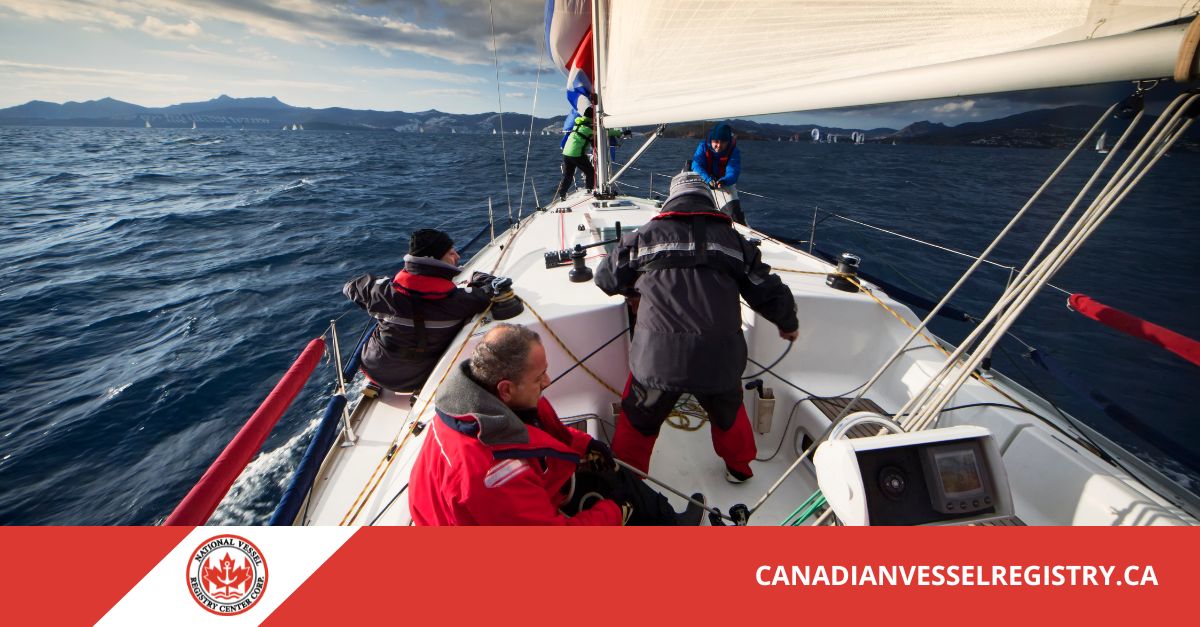
Staying Aligned With Evolving Regulations
Regulations continue to evolve, particularly with safety equipment standards like the new PFD performance levels. Staying compliant requires regular checks of both your gear and your documentation.
To stay aligned:
- Review Transport Canada updates annually
- Inspect all onboard safety equipment before each season
- Confirm your registration or licencing status is current
- Replace outdated or non-compliant PFDs
Avoiding Common Compliance Gaps
Even experienced boaters can overlook key requirements. Some of the most common issues include:
- Expired licencing or registration
- Missing or outdated safety equipment
- Incorrect display of identification numbers
- Using the wrong documentation type for the boat’s use
Addressing these gaps early helps prevent fines and interruptions during inspections. When your paperwork and equipment are aligned, you can navigate with confidence.
Preparing for the 2026 Boating Season
With the introduction of new PFD standards and continued enforcement of documentation rules, preparation is more important than ever.
A complete readiness check should include:
- Verifying all required safety equipment is onboard
- Ensuring PFDs meet updated performance standards
- Confirming your documentation is current and accurate
- Reviewing applicable regulations for your boat type
Boat safety equipment requirements are not static. Staying informed and proactive ensures that your boat remains compliant year after year.
A Complete Approach to Compliance
Focusing only on gear or only on paperwork creates unnecessary risk. True compliance comes from addressing both areas together.
Your boat must:
- Carry all required safety equipment
- Meet updated regulatory standards
- Maintain valid registration or licencing
- Reflect accurate ownership records
When each of these elements is in place, you reduce the likelihood of fines, delays, or enforcement actions.
Boat safety equipment requirements in Canada are designed to protect everyone on the water. By aligning your equipment with proper documentation, you create a safer and more reliable boating experience from launch to return.