
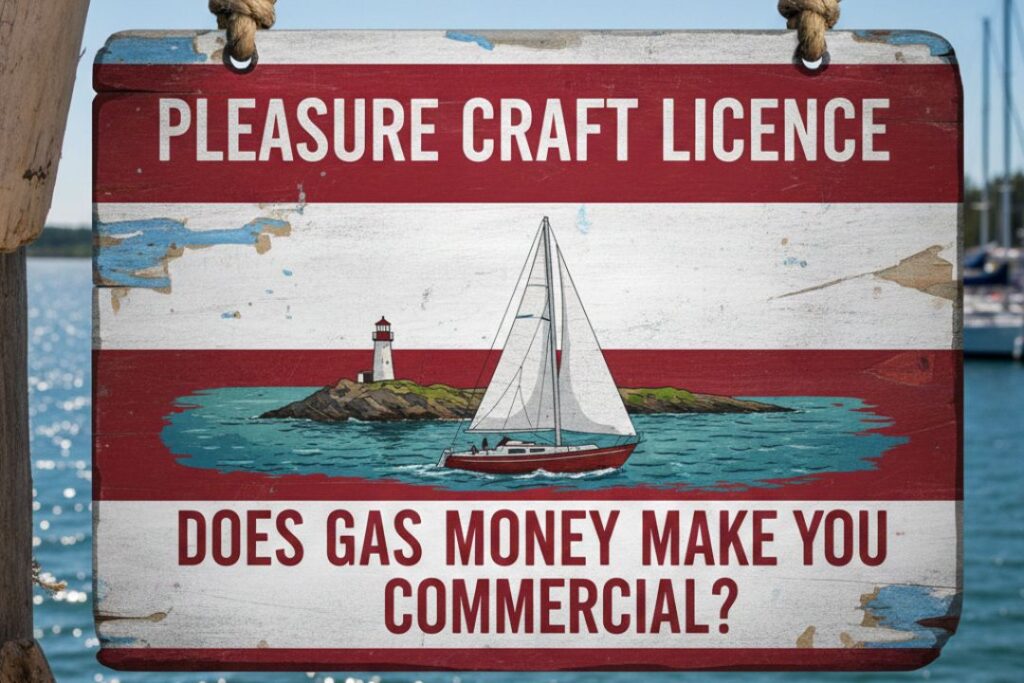
No. Accepting gas money from a friend does not make your boat commercial, and it does not change your eligibility to hold a pleasure craft licence.

When friends voluntarily chip in to help cover fuel or shared trip costs, your boat remains a pleasure craft used for recreation. The key factor is that there is no required payment and no profit involved.
From our perspective as an online service that provides official government forms, this is one of the most common questions we help boat owners navigate, especially when deciding whether a licence or registration path applies to their situation.
What Counts as a Pleasure Craft in Canada
A pleasure craft is a boat used for enjoyment, leisure, and personal activities on the water. This can include fishing with friends, cruising, water sports, or spending time with family. The defining element is purpose, not whether money changes hands in a casual way.
When friends or family join you on a recreational trip, they are considered guests. Guests are not paying customers, and your trip remains non-commercial.
From our experience assisting Canadians with licensing and registration forms, confusion usually arises when people assume any exchange of money automatically changes the status of their boat. That is not how Transport Canada evaluates pleasure use.
The “Gas Money Rule” Explained
Transport Canada recognizes that recreational boating often involves shared costs. This is addressed through guidance that allows for voluntary sharing of expenses among guests.
What qualifies as acceptable cost sharing includes:
- Fuel used during the trip
- Food and refreshments consumed onboard
- Bait, ice, or similar minor trip-related expenses
What makes this acceptable is that contributions are optional. The trip does not depend on payment, and no one is being charged for access to the boat.
Situations that still qualify as pleasure use include:
- A friend offering cash for fuel after the trip
- Multiple guests agreeing informally to split fuel costs
- Someone paying for snacks or bait without being asked
In these cases, your boat remains eligible for a pleasure craft licence, and no registration change is required.
Where Canadian Maritime Laws Come Into Play
The distinction between recreational and commercial use is rooted in Canadian maritime laws. These laws help define when a boat is considered to be carrying passengers versus guests, and when remuneration is involved.
For reference, relevant federal rules can be found within Canadian maritime laws, which outline how boats are categorized and regulated under federal authority.
These laws are not concerned with casual generosity among friends. They focus on structured payments, services offered, and whether the operator is benefiting financially from operating the boat.
When Gas Money Turns Into Commercial Use
Problems arise when payment is no longer optional or no longer limited to shared expenses. At that point, the activity may be considered commercial, even if it is described casually.
Indicators that your boating activity may be commercial include:
- Charging a fixed amount per person
- Requiring payment before allowing someone onboard
- Advertising trips or services, even informally
- Accepting payment for your time, skill, or guidance
Calling the payment “gas money” does not change how it is evaluated. If there is profit or required payment, the activity may be viewed as carrying passengers for hire.
Guests Versus Passengers on a Boat
The distinction between a guest and a passenger is central to determining whether a boat remains a pleasure craft.
A guest is someone who:
- Is invited socially
- Is not required to pay
- Is participating in a recreational outing (just having fun)
A passenger is someone who:
- Pays to be onboard
- Is receiving a service
- Is part of a transaction
Once people onboard are considered passengers, the boat is no longer being used exclusively for pleasure. This is when licensing alone may no longer be appropriate.
Pleasure Craft Licence Compared to Registration
A pleasure craft licence applies to boats used only for recreational purposes. It is not the same as registering a boat for commercial use, and the two should never be confused.
A licence is appropriate when:
- The boat is used strictly for personal enjoyment
- There is no exchange of money for services
- Guests are not required to pay
Registration is required when:
- The boat is used for any commercial activity
- Passengers are carried for payment
- The boat performs work or services
Commercial boats must be entered on the small boat register and meet additional requirements. These include different safety standards and insurance obligations. Licensing and registration serve different purposes and are governed by different rules.
licenced pleasure craft
Situations Where Registration Is Optional
Even when a boat is used strictly for pleasure, there are situations where registration may still be chosen rather than licensing.
Optional reasons to register include:
- Planning to take the boat outside of Canada
- Wanting to reserve a specific boat name
- Needing to apply for a marine mortgage
In addition, boats that are 15 gross tonnes or more and have an engine larger than 7.5 kW may qualify for registration even if they are not used commercially. In these cases, the choice depends on how the owner plans to use the boat.
The Guided Fishing Scenario
One of the most common misunderstandings involves fishing trips. A boat owner may feel they are simply taking friends fishing, but the facts matter.
If people pay for:
- Your fishing expertise
- Your time as a guide
- Access to fishing locations
Then the activity is commercial, regardless of how casual it seems. Even if the payment is described as fuel reimbursement, an exchange of money for a service changes the classification of the trip.
In these cases, a pleasure craft licence is no longer appropriate, and registration is required to comply with federal rules.
pleasure craft licence
Insurance and Safety Differences for Commercial Boats
Once a boat is used commercially, different obligations apply. These differences are significant and should not be overlooked.
Commercial use typically requires:
- A commercial insurance policy
- Additional safety equipment
- Compliance with non-pleasure craft standards
Operating a commercial boat without proper registration and coverage can lead to penalties and coverage issues. This is why it is so important to correctly identify whether your boating activity is recreational or commercial.
How We Support Boat Owners
Our service is designed to make it easier to access official government forms related to boating in Canada. We do not gather documents on your behalf, and we do not secure approvals. What we provide is a streamlined way to obtain the correct forms for your situation.
We help you:
- Apply for a pleasure craft licence
- Access forms for boat registration in Canada
- Navigate a pleasure craft licence renewal
- Complete a pleasure craft licence transfer
By offering a centralized online portal, we reduce confusion and help ensure you are using the right forms based on how your boat is actually used.
Avoiding Common Licensing Mistakes
Many boat owners run into issues simply because they rely on assumptions or informal advice. The most common mistakes we see include:
- Assuming any money exchange requires registration
- Believing casual trips can never be commercial
- Mixing recreational and paid activities on the same boat
- Using incorrect forms for their situation
Being clear about how your boat is used protects you from compliance issues and helps ensure you remain properly licensed or registered.
Making the Right Choice for Your Boat
If your boat is used exclusively for recreation and gas money is shared voluntarily, a pleasure craft licence is appropriate. If you decide later to offer services, guide trips, or accept required payments, registration becomes necessary.
Because these situations can change over time, many boat owners return to us when their needs evolve. Whether you are maintaining your current licence or transitioning to registration, having access to the correct government forms makes the process far more manageable.
By focusing on how your boat is actually used and applying the correct category, you can enjoy time on the water with confidence while staying aligned with federal requirements.
Frequently Asked Questions About Pleasure Craft Licence: Does Gas Money Make You Commercial?
Does this answer cover every situation related to Pleasure Craft Licence: Does Gas Money Make You Commercial??
It covers a common scenario, but exact requirements can still vary by vessel use, ownership history, tonnage, import status, and the record type involved.
What should I check before submitting any related forms?
Gather the pleasure craft licence number, owner details, and the hull or vessel information so you can confirm the correct process before you proceed.
What should I review next after this FAQ?
The linked pages below point you to the most relevant service page, supporting archive, and adjacent topics for the next step.